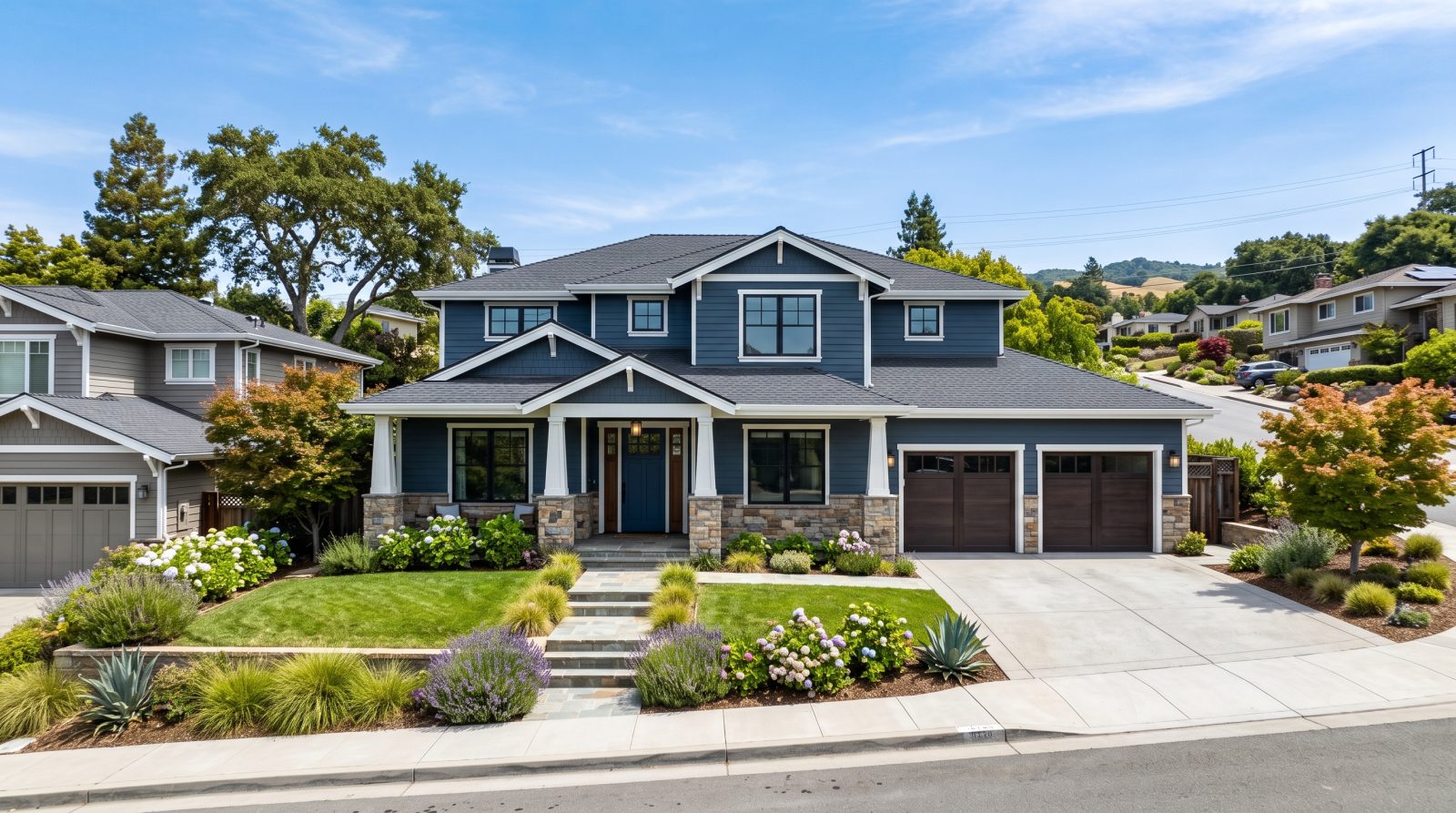
What kinds of homes and projects are common in San Bruno?
San Bruno sits on the Peninsula between Daly City and South San Francisco to the north and Millbrae to the south, just west of San Francisco International Airport, with US-101 and El Camino Real running through it and Interstate 380 cutting across the city. Much of its housing was built during and after World War II, when the area around the former Tanforan site and the surrounding flats filled in quickly with tract homes. That history shapes the work contractors do here: a large share of jobs involve modernizing 1940s-to-1960s houses that have small original kitchens, single bathrooms, dated wiring, and floor plans that today's owners often want opened up.
Neighborhoods vary in both terrain and house type, which changes the scope of a typical project. Hillside areas such as Crestmoor, Rollingwood, and Monte Verde tend to have homes on sloped lots where drainage, retaining, and foundation work come up more often, while flatter areas like Belle Air, Mills Park, and the blocks near San Mateo Avenue downtown have a denser mix of older bungalows and post-war single-family homes. Knowing which part of the city your home is in helps a contractor anticipate access, grading, and structural considerations before the first estimate.
- Kitchen and bathroom remodels in mid-century homes, including layout changes and updated finishes
- Electrical panel upgrades and rewiring for houses with original mid-century systems
- Foundation, drainage, and retaining work on Crestmoor, Rollingwood, and Monte Verde hillside lots
- Room additions, garage conversions, and ADUs to add space on compact Peninsula lots
- Dry rot, window, and exterior repairs related to the area's coastal fog and moisture
Do I need a permit to remodel in San Bruno?
Most structural, electrical, plumbing, and mechanical work in San Bruno requires a permit from the City of San Bruno Building Division, part of the Community Development Department. As a general rule, projects that change a home's structure, add square footage, alter plumbing or gas lines, modify the electrical system, or convert a space (for example, turning a garage into living area or building an accessory dwelling unit) will need permits and inspections. Simple cosmetic work like painting, replacing fixtures with similar ones, or installing flooring over an existing subfloor typically does not. Because requirements change and individual situations differ, you should confirm with the city before starting, and treat anything here as general information rather than legal advice.
A licensed general contractor will usually handle the permit application, coordinate plan review, and schedule the required inspections as part of the job. San Bruno is in a seismically active part of the Bay Area, near the San Andreas Fault zone that runs along the west side of the Peninsula, so building officials pay close attention to structural and foundation details. It is a good idea to ask your contractor how permitting and inspections are accounted for in their estimate and timeline so there are no surprises.
- Permits generally required: additions, ADUs, garage conversions, foundation work, electrical panel changes, re-piping, and water heater or gas line work
- Usually no permit: interior painting, like-for-like fixture swaps, and flooring over a sound subfloor
- Verify scope, fees, and submittal requirements with the City of San Bruno Building Division before work begins
- Confirm any contractor's license status and standing directly with the CSLB
How much do remodeling projects typically cost in San Bruno?
Costs in San Bruno track with the broader San Francisco Peninsula, where labor and materials run higher than national averages. The figures below are typical industry ranges meant for early planning, not quotes; your actual price depends on the size of the space, the condition of the existing home, the finishes you choose, and what inspectors uncover once walls are opened in an older house. Many San Bruno homes are decades old, so it is common to find outdated wiring, galvanized plumbing, or foundation issues that add to a project once work is underway. Getting a written, itemized estimate from a contractor who has seen your home is the only way to get a real number.
When you compare estimates, look at what each scope actually includes, such as demolition, permits, structural changes, electrical and plumbing upgrades, and finish materials, rather than just the bottom-line figure. A lower estimate that leaves out permitting or assumes no surprises in an older Peninsula home can end up costing more than a thorough one. Treat these ranges as a starting point for the conversation, not a guaranteed price.
- Bathroom remodel: typically a mid-four-figure to low-five-figure range depending on layout changes and finishes (estimate, not a quote)
- Kitchen remodel: commonly a five-figure project, with cost rising sharply when walls, plumbing, or electrical are moved
- Room addition or ADU: usually a significant five- to six-figure investment given Peninsula labor and permit costs
- Electrical panel upgrade or partial rewire: often a four- to five-figure range in older mid-century homes
- All figures are typical industry estimate ranges, not quotes; request a written estimate for your specific project
How do I choose a reliable contractor in San Bruno?
Start by verifying that any contractor you consider holds an active California license for the trade involved, which you can check directly through the CSLB. Ask whether they regularly work in San Bruno and the surrounding Peninsula cities, since familiarity with the City of San Bruno's permitting process and with mid-century housing stock makes a real difference in older homes. A contractor who has worked on hillside lots in Crestmoor or Rollingwood, or on post-war homes near Mills Park and downtown, is more likely to anticipate the foundation, drainage, and structural quirks common to those areas.
Get more than one written estimate, and make sure each one spells out the scope, who pulls permits, the payment schedule, and how changes are handled. Ask the contractor to confirm their licensing, bonding, and insurance details in writing rather than relying on verbal assurances, and verify what you can independently. Clear, specific answers about your particular home and the local permit process are a better signal than promises of being the cheapest or fastest. When you are ready, request a free quote and we will help connect you with a local contractor for your project.
- Verify license status and classification through the CSLB before signing anything
- Ask for written confirmation of bonding and insurance, and verify independently
- Choose someone experienced with San Bruno permitting and mid-century Peninsula homes
- Compare itemized scopes side by side, not just the total price
- Get every agreement, payment schedule, and change-order process in writing