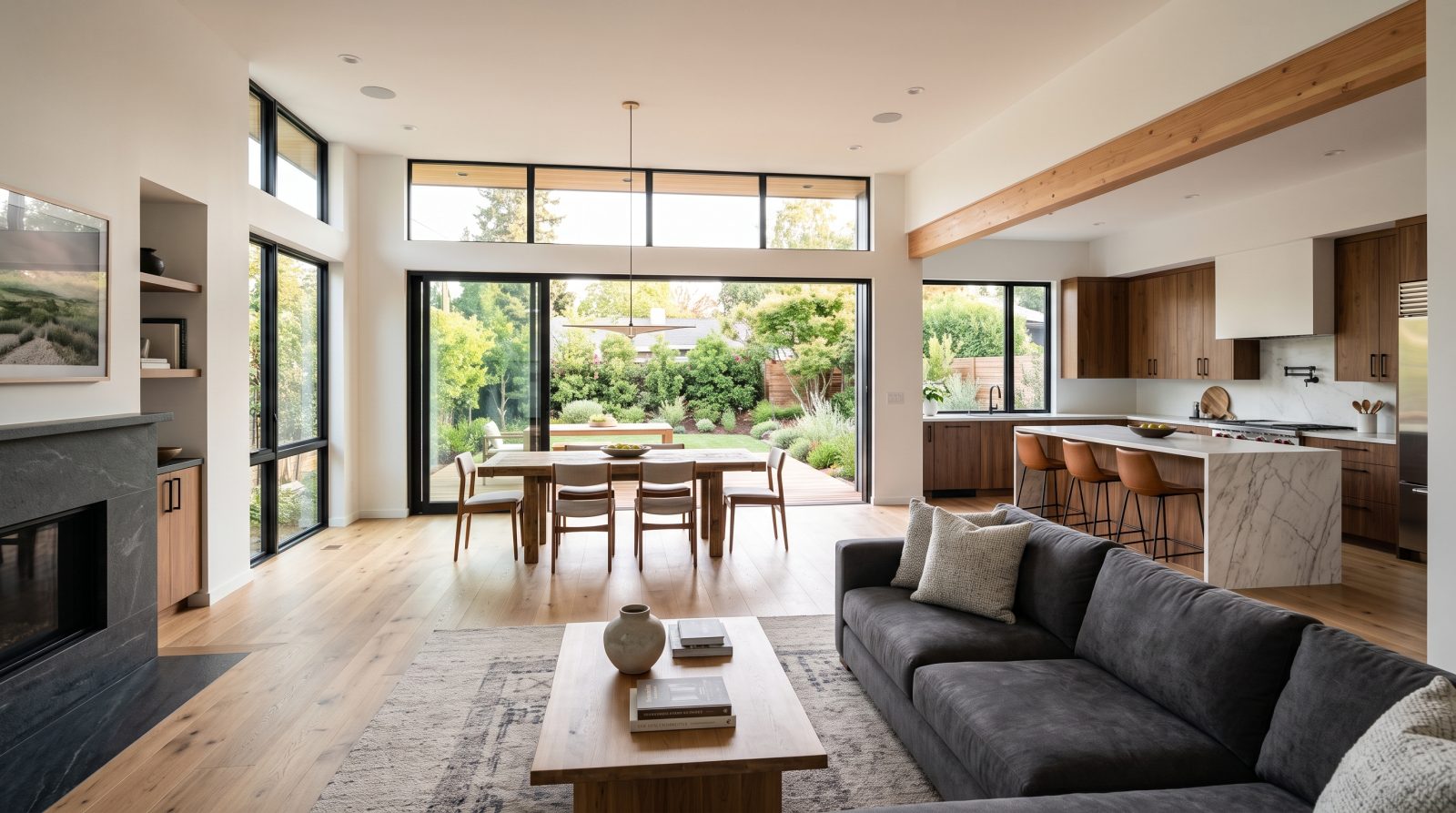
What is design-build and how does it work?
In design-build delivery, a single entity is contractually responsible for both designing and constructing your project. That entity might be a contractor with in-house designers and architects, an architecture firm that also builds, or a partnership formed for the project. You sign one contract, and that team carries the project from the first sketch through the final inspection.
Because the designers and builders work for the same organization, they typically collaborate from the start. The people who will swing the hammers can flag what is buildable and roughly what it costs while the design is still on paper, which can reduce surprises and change orders later. This early overlap is the main reason design-build projects are often able to start construction sooner than projects that complete a full design before pricing begins.
Design-build is common for residential additions, kitchen and bath remodels, and whole-home renovations where a homeowner wants a single accountable partner and is comfortable selecting that partner based on portfolio, process, and rapport rather than on a competitive bid against finished plans.
- One contract covers both design and construction.
- Designers and builders collaborate early, often reducing late change orders.
- Construction can frequently begin before every detail is finalized, because design and build phases overlap.
- You typically choose the firm on portfolio, process, and fit rather than on competing bids for the same drawings.
What is traditional bidding (design-bid-build)?
Traditional bidding splits the project into three sequential phases: design, bid, and build. First you hire an architect or designer to develop complete construction documents. Once those plans and specifications are finished, you (or your designer) send them to multiple general contractors, who each return a bid to build exactly what is drawn. You then select a builder, often weighing price alongside experience, references, and schedule.
The defining feature is that design is fully completed and independent before any contractor prices the work. Because every bidder is pricing the same detailed drawings, you can compare proposals on a closer-to-apples-to-apples basis, and your designer is not financially tied to the company doing the construction.
The trade-off is time and coordination. The design phase runs to completion before pricing begins, so the overall calendar is typically longer, and you act as the link between two separate parties. If bids come back over budget, the plans may need to be revised and re-priced, which adds another loop to the schedule.
- Three distinct phases: design, then competitive bid, then build.
- Plans are completed before contractors price the work.
- Multiple bids on the same drawings make price comparison more direct.
- The designer is independent of the builder, which some homeowners prefer for oversight.
- The homeowner coordinates between the design and construction parties.
How do design-build and traditional bidding compare on cost, time, and risk?
On schedule, design-build usually has the edge because design and construction overlap rather than running back to back. Traditional bidding adds the bid period and the risk of a re-design loop if prices exceed the budget, which tends to make the total calendar longer. The size of that difference varies widely by project scope and permitting, so treat any single number as a rough guideline rather than a promise.
On price, the methods reach the goal differently. Traditional bidding surfaces competitive pricing through multiple bids on identical plans, which can be an advantage when scope is well defined. Design-build relies on transparency within one team and on early cost feedback during design; many design-build firms work toward a budget from the outset and refine pricing as drawings develop. Design-build does not automatically cost more or less - it shifts where and when pricing pressure shows up.
On risk and accountability, design-build consolidates responsibility: if something falls between design and construction, one firm owns it, which can simplify problem-solving. Traditional bidding spreads responsibility across separate parties, which gives you independent design oversight but can lead to finger-pointing if a plan and a field condition conflict. Across both methods, change orders, hidden conditions in older homes, and permit timelines are common cost and schedule variables.
All figures and timeframes in any comparison like this are typical industry ranges offered for education only. Your actual cost and schedule depend on scope, finishes, site conditions, and local permitting, and should come from a written proposal for your specific project.
- Speed: design-build typically starts construction sooner; traditional bidding adds a bid phase and possible re-design loops.
- Price discovery: traditional bidding uses competing bids on the same plans; design-build uses early, in-team cost feedback toward a budget.
- Accountability: design-build = one responsible party; traditional bidding = independent design oversight but split responsibility.
- Both are affected by change orders, hidden conditions in older homes, and permit timelines.
Which method fits common Bay Area home projects?
The Bay Area's housing mix shapes this decision. Many homes here are older - Victorians, Edwardians, mid-century ranches, and post-war bungalows - where opening up walls can reveal outdated wiring, knob-and-tube remnants, undersized framing, or foundation and seismic concerns. When hidden conditions are likely, the early collaboration in design-build can help, because builders flag probable issues while the design is still flexible. For the same reason, some homeowners prefer traditional bidding's fully detailed plans so contractors price a known, documented scope.
Local permitting and jurisdiction also matter. Each city and county across the Bay - from San Francisco and Oakland to San Jose, Berkeley, and the Peninsula towns - runs its own planning and building departments, and some areas add design review, historic-district rules, or coastal and hillside requirements. Projects facing complex approvals sometimes benefit from a single team that carries the plans through that process, while highly design-driven or architecturally sensitive projects may favor an independent architect leading the design before bids.
As a general guide: well-defined projects with finished plans and a desire for competitive pricing lean toward traditional bidding, while remodels with evolving scope, a priority on speed, or a preference for one accountable partner lean toward design-build. Many Bay Area kitchen, bath, and addition projects can be delivered well either way - the deciding factors are usually how settled your scope is and how much coordination you want to handle.
Whichever path you choose, confirm that any contractor is properly licensed for the work in California and that required permits are pulled for your jurisdiction. This is educational guidance, not legal advice, and licensing and permit rules should be verified with your local building department.
- Older Bay Area housing stock raises the odds of hidden conditions, which favors early design-build collaboration for many remodels.
- Each Bay Area city and county sets its own permit, design-review, and historic or hillside rules - factor approvals into your method choice.
- Settled scope plus a desire for competitive bids leans traditional; evolving scope, speed, or single-partner accountability leans design-build.
- Verify California licensing and pull required local permits regardless of delivery method.
How to choose between design-build and traditional bidding
Start by gauging how defined your project is. If you already have complete, contractor-ready plans or a strong vision you want documented independently, traditional bidding lets you collect comparable bids on that exact scope. If your scope is still taking shape and you want cost feedback to guide design decisions in real time, design-build keeps pricing and drawings moving together.
Next, weigh what you value most. Prioritize independent design oversight and competitive pricing on finished plans, and traditional bidding fits. Prioritize speed, a single point of contact, and fewer hand-offs to manage yourself, and design-build fits. Be honest about your own bandwidth, too: traditional bidding asks you to coordinate between separate design and construction parties, while design-build centralizes that coordination with the firm.
In either case, vet the people, not just the method. Review past projects similar to yours, ask how the firm handles change orders and hidden conditions, confirm the scope and allowances in writing, and make sure licensing and permits are addressed before work begins. A clear written agreement matters more to your outcome than the delivery method's label.
- Choose traditional bidding when plans are complete, scope is fixed, and competitive pricing or independent oversight is the priority.
- Choose design-build when scope is evolving, speed matters, or you want one accountable partner managing coordination.
- Either way, review comparable past work, get scope and allowances in writing, and confirm licensing and permits up front.
- If you are unsure, ask each prospective partner to walk you through how they would deliver your project and what their estimate includes.