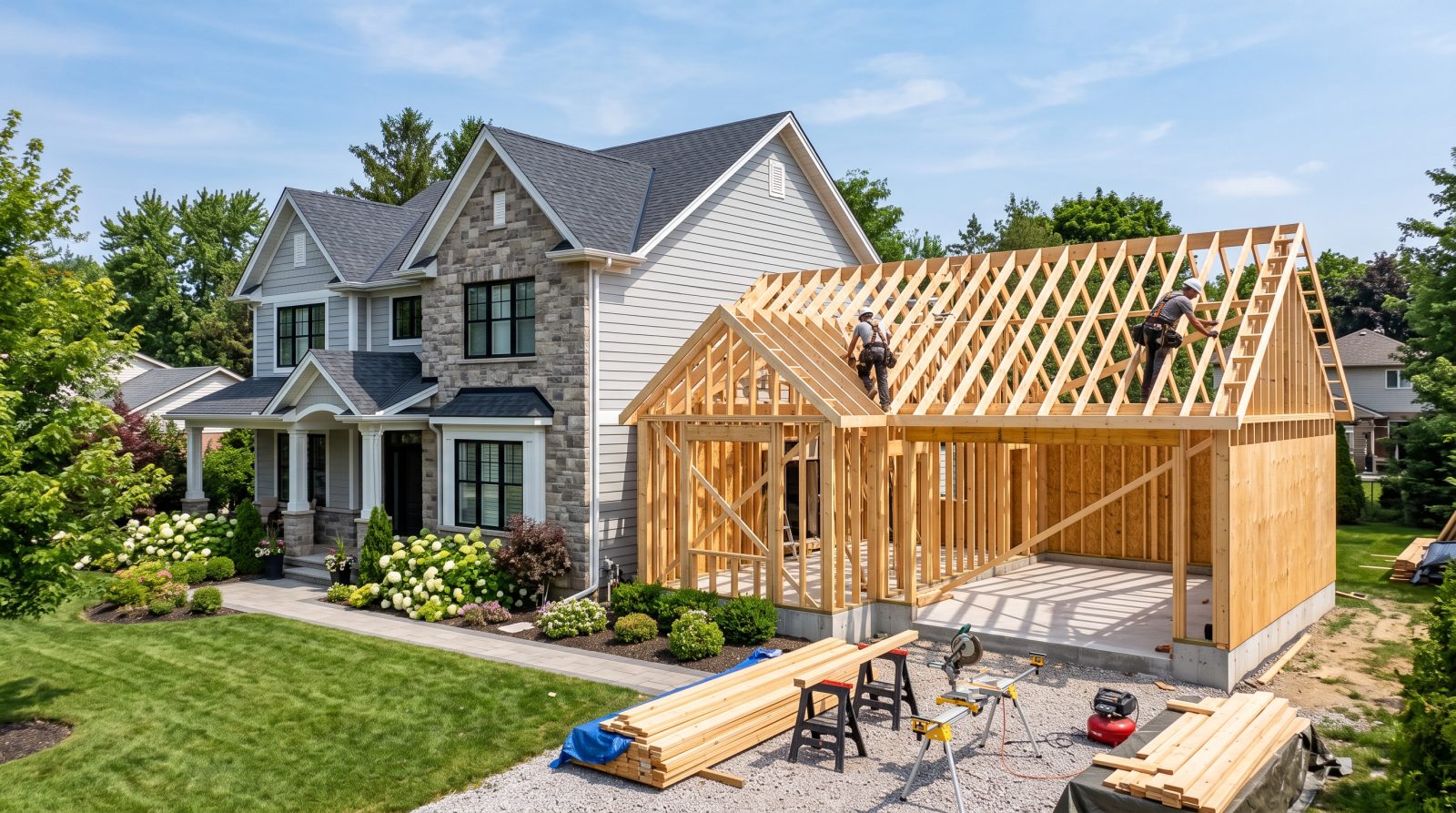
What counts as a home addition versus a room addition?
A home addition is any project that adds new, permanently enclosed and conditioned living space to your house. A room addition is one specific kind of home addition: it extends the footprint or rises above the existing structure to create a defined new room, such as a primary bedroom suite, a home office, an expanded kitchen, or a family room. People often use the two terms interchangeably, but it helps to think of room addition as a subset of the broader home-addition category.
Additions generally fall into a few recognizable formats, and the format you choose drives much of the cost, schedule, and permitting path. Knowing the difference up front makes your conversations with a contractor more productive and helps you compare estimates on a like-for-like basis.
- Bump-out: a small extension of an existing room, often a few feet, to gain a breakfast nook, larger bathroom, or closet.
- Room addition (ground-level): a new room built on a new foundation off the side or back of the house.
- Second-story addition: adding a level on top of an existing single-story home, which typically requires structural reinforcement below.
- Garage conversion or addition: converting an attached garage into living space, or building a new garage with living space.
- ADU (accessory dwelling unit): a separate, self-contained living unit, which is governed by its own state and local rules and is usually handled as its own project type.
How long does a home addition take in the Bay Area?
Most homeowners underestimate the planning phase and overestimate how fast construction starts. As a typical industry range, expect design and engineering to take a few weeks to a few months, permit review in many Bay Area jurisdictions to take several weeks to a few months depending on the city and the complexity of the project, and on-site construction for a single room addition to run roughly two to five months. Larger or second-story additions can push the overall project past a year from first sketch to final sign-off. These are general planning ranges, not a guaranteed schedule; weather, material lead times, design changes, and inspection backlogs all affect the real timeline.
A realistic project usually moves through a predictable sequence. Understanding the order of operations helps you set expectations and recognize where delays most often occur.
- Design and planning: drawings, structural engineering, and (for many additions) a Title 24 energy compliance document.
- Permitting: plan submittal to your city or county building department, plan-check comments, and revisions.
- Site prep and foundation: excavation, footings, and foundation work.
- Framing, rough-ins, and inspections: framing, then electrical, plumbing, and mechanical rough-ins with inspections at each stage.
- Insulation, drywall, and finishes: interior work, fixtures, flooring, and paint.
- Final inspection and certificate of occupancy or final sign-off before the space is legally usable.
What does a home addition typically cost?
Home additions are usually discussed as a cost per square foot, and the range is wide because finishes, foundation conditions, design complexity, and Bay Area labor and material costs vary so much from one project and city to the next. As a typical industry range used for planning, additions in this region are often quoted on a per-square-foot basis that can run from the mid-hundreds into the high hundreds of dollars per square foot, with high-end designs and difficult site conditions going higher. Second-story additions tend to cost more per square foot than ground-level additions because they require structural reinforcement of the floors below.
These are estimates for budgeting only, not quotes. The only way to get a real number is to have a contractor evaluate your specific home, lot, soil, access, and design. A few cost drivers explain most of the variation between estimates.
- Foundation and structural work, including soil conditions and whether the existing structure must be reinforced.
- Size and ceiling height of the new space, and whether you are adding plumbing (kitchens and bathrooms cost more).
- Finish level, from builder-grade to custom cabinetry, stone, and high-end fixtures.
- Design and engineering fees, permit fees, and any required reports such as soils or arborist reports.
- Site access and complexity, since tight Bay Area lots and hillside sites can increase labor and equipment costs.
- Always budget a contingency for surprises uncovered once walls or the ground are opened up.
What permits and approvals does an addition need?
In the Bay Area, building a home addition almost always requires a building permit from your local city or county building department, and adding new square footage frequently triggers structural, electrical, plumbing, mechanical, and energy (Title 24) requirements. Depending on your location and the project, you may also need planning or zoning review for setbacks, height, and lot coverage, and homes in hillside, fire, flood, or coastal zones can face additional review. This page is educational and not legal advice; you should verify the exact requirements with your local building department, and confirm that any contractor you hire is properly licensed for the work.
Permitting protects you. Permitted, inspected work is documented, generally safer, and far less likely to cause problems when you sell or refinance. Skipping permits can lead to fines, forced removal, insurance complications, and difficulty closing a future sale. A good contractor will help navigate the process, but the property owner is ultimately responsible for confirming the work is permitted.
- Confirm zoning and setback rules with your city or county planning department before finalizing a design.
- Verify whether your project needs planning review in addition to a building permit.
- Confirm any contractor's license status and that the license type matches the work (verify CSLB license details directly).
- Ask how permit fees and any required reports are handled in the estimate.
- Keep copies of the approved plans, permit, and signed-off inspections for your records.
How do I choose a contractor for a home addition?
Choosing the right contractor matters more on an addition than on almost any other home project, because additions touch your foundation, structure, and the systems of your existing house. Look for a contractor with relevant experience in additions specifically, clear written estimates that break out scope, and a transparent approach to permits, change orders, and inspections. Get more than one estimate so you can compare scope and approach, not just price, and be cautious of any bid that is dramatically lower than the others, since it may exclude important scope.
Use the steps below as a practical checklist when you talk to candidates. The goal is to find a licensed professional whose proposal you understand and whose process gives you confidence.
- Ask whether they regularly do additions and how they handle structural engineering and permitting.
- Request a written estimate that clearly separates labor, materials, allowances, and excluded items.
- Ask how change orders are documented and priced before any extra work begins.
- Confirm licensing and insurance, and verify the license yourself rather than relying on a verbal claim.
- Clarify the projected schedule, payment milestones, and who manages inspections.
- Request a free quote through this site to connect with local Bay Area contractors and compare estimates.