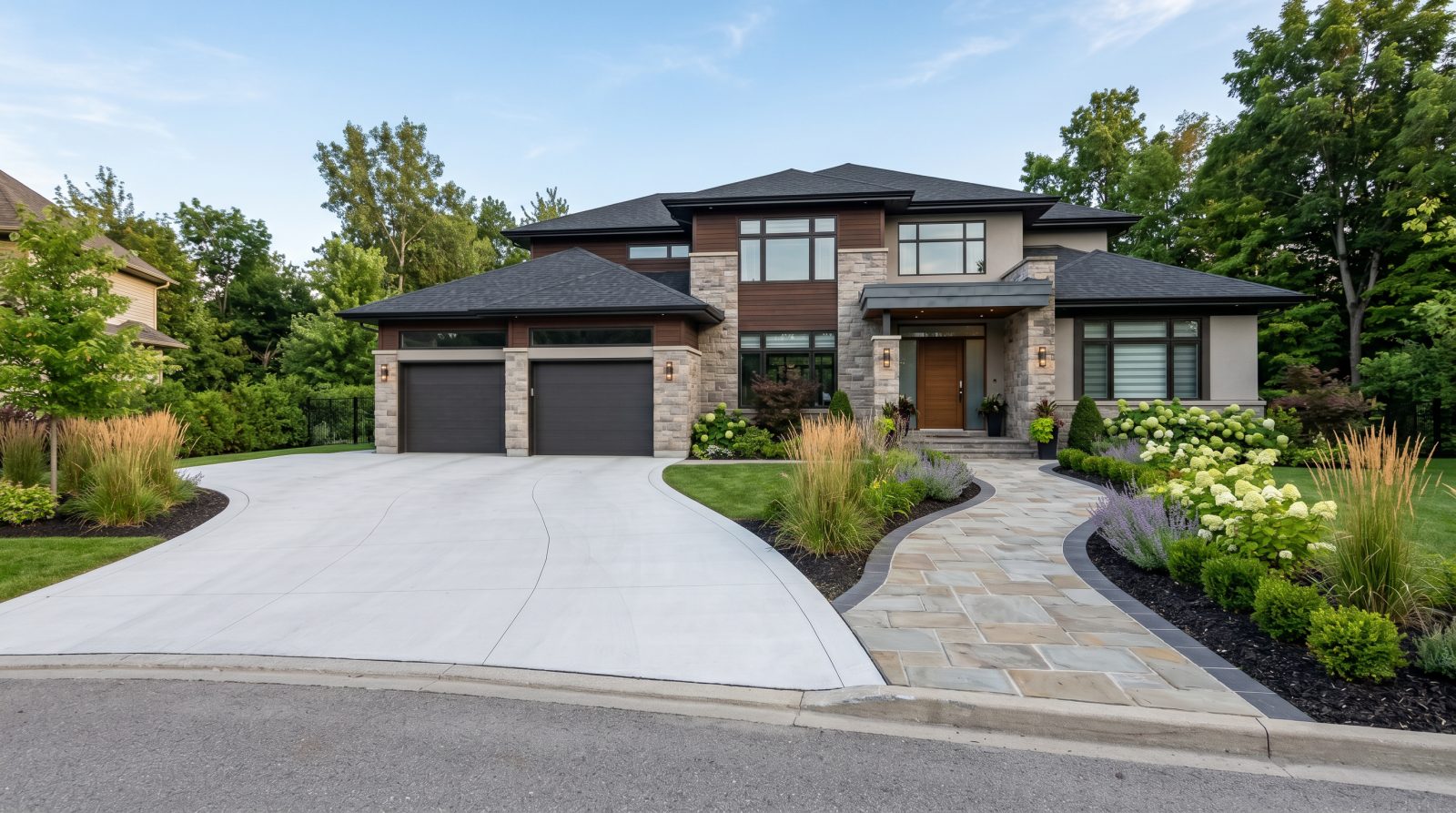
What does concrete and masonry work include?
Concrete and masonry are related but not identical. Concrete work means forming and pouring a mix of cement, aggregate, and water that cures into a single solid mass: driveways, patios, walkways, slabs, steps, curbs, and footings or foundations. Masonry means assembling individual units with mortar, such as brick, concrete block (CMU), natural stone, and pavers. Many contractors handle both, and a single project often combines them, for example a poured concrete footing supporting a block retaining wall finished with stone veneer.
A typical install follows a predictable sequence: layout and excavation, grading and a compacted gravel base, forming, placing reinforcement (rebar or wire mesh) where required, the pour or unit-laying, finishing the surface, and then curing. Curing is the part homeowners most often underestimate. Concrete reaches enough strength to walk on within a day or two but continues gaining strength for weeks, which is why a contractor may ask you to keep vehicles off a new driveway for several days.
Bay Area conditions shape the work. Expansive clay soils in parts of the East Bay and South Bay move with moisture, hillside lots in San Francisco, the Peninsula, and the Oakland and Berkeley hills demand engineered retaining and drainage, and seismic considerations make proper footings and reinforcement important rather than optional.
- Flatwork: driveways, patios, walkways, slabs, steps, and pool decks
- Structural concrete: footings, foundations, stem walls, and piers
- Masonry units: brick, concrete block, natural stone, and paver installations
- Retaining walls: poured concrete, block, or segmental systems for sloped lots
- Repair and restoration: crack repair, repointing mortar joints, resurfacing, and chimney work
- Decorative finishes: stamped, colored, or exposed-aggregate concrete and stone veneer
How long does a concrete or masonry project take?
For planning purposes, here are typical timelines, not guarantees, since weather, inspections, and site conditions move real dates. A standard residential walkway or small patio is often a one-to-three-day job. A full driveway tear-out and replacement commonly runs three to five working days of active work, plus curing time before you drive on it. A retaining wall ranges from a few days to a couple of weeks depending on length, height, and whether it needs an engineered design and inspection.
Decorative and masonry work tends to take longer per square foot than plain flatwork because of the detail involved. Paver patios, stone veneer, and stamped concrete add finishing steps, and brick or block walls are laid course by course with cure time between stages. Repair jobs like crack injection or repointing are usually shorter, often a day or two, but a thorough chimney rebuild can take significantly longer.
Two things reliably extend a schedule: permits and inspections, which add lead time before and during the job, and curing, which cannot be rushed. A contractor who promises to pour and immediately let you park on fresh concrete is cutting a corner. Build a realistic buffer into your plans rather than counting on the fastest-possible finish.
What does concrete and masonry work typically cost?
The figures below are typical industry estimate ranges for the Bay Area, intended for budgeting only. They are not quotes. Your actual price depends on square footage, thickness, reinforcement, demolition and haul-away of old material, site access for trucks and pumps, soil and drainage, the finish you choose, and current material prices. The only way to get a real number is an itemized written estimate for your specific project.
As rough orientation, plain concrete flatwork in this region is often estimated in the range of roughly 10 to 20 dollars per square foot installed, with decorative finishes such as stamped or colored concrete and paver or stone work commonly estimated higher, frequently 20 to 40 dollars per square foot or more depending on the material and pattern. Retaining walls are usually priced by the square face foot and rise sharply with height because taller walls need engineering, deeper footings, and drainage. Repairs like crack repair or repointing are typically smaller line items but vary with extent and access.
To compare bids fairly, make sure each estimate covers the same scope: demolition and disposal, base preparation, reinforcement, thickness, finish, expansion joints, cleanup, and any permit or engineering fees. A bid that is far below the others usually leaves something out, often base prep or reinforcement, which are exactly the parts you cannot see once the work is done but that determine how long it lasts.
- Estimates are typical ranges for budgeting, not quotes or guaranteed pricing
- Demolition, haul-away, and base prep are common cost drivers that vary by site
- Decorative finishes and natural stone usually estimate higher than plain concrete
- Retaining-wall cost climbs with height due to engineering and drainage needs
- Always get itemized written estimates and confirm scope matches across bids
Do I need a permit for concrete or masonry work?
Often, yes, especially for anything structural. As a general rule across Bay Area jurisdictions, retaining walls above a certain height (commonly around four feet measured from the bottom of the footing, but thresholds and rules differ by city), foundation and structural work, and walls retaining a surcharge such as a driveway or slope typically require a building permit and sometimes an engineered design. Purely cosmetic flatwork like a small ground-level patio may not, but requirements vary, and the only authoritative source is your local building department.
This is educational information, not legal advice. Permit thresholds, setback rules, and drainage requirements differ between San Francisco, Oakland, San Jose, and the many Peninsula and East Bay cities, and they change over time. Always verify the current rules with your city or county, and confirm in writing who is responsible for pulling the permit before work begins.
A reputable contractor treats permitting as part of the job and will not ask you to pull a permit under your own name to avoid scrutiny, which shifts liability to you and is a red flag. Permitted, inspected work also protects you at resale, because unpermitted structural or retaining work can surface during a home inspection or appraisal and become a costly problem later.
How do I choose a concrete and masonry contractor?
Start by confirming the contractor is properly licensed for the work in California and ask for their license details so you can verify them yourself through the state licensing board. Verify that they carry current liability insurance and workers' compensation coverage. Do not take these as given; ask, and check. We do not vouch for credentials on a contractor's behalf, and you should confirm licensing, bonding, and insurance directly before signing anything.
Get at least three itemized written estimates that spell out scope, materials, thickness, reinforcement, base preparation, finish, and who handles permits. Ask how they will address your specific site conditions, such as expansive clay, a hillside, drainage, or seismic detailing, since the right approach varies a great deal across the Bay Area. A contractor who walks the site and asks about soil and water before quoting is usually a better sign than one who gives a price sight unseen.
Put everything in a written contract: scope, materials, payment schedule tied to milestones rather than a large upfront sum, start and finish expectations, cleanup, and any warranty offered. Be cautious of pressure to decide immediately, cash-only demands, or estimates far below everyone else's. When you are ready, you can request a free quote through us and we will help connect you with local contractors for your project.
- Verify the contractor's California license, bonding, and insurance directly yourself
- Collect at least three itemized written estimates covering the same scope
- Ask how they will handle your soil, slope, drainage, and seismic considerations
- Use a written contract with milestone-based payments, not a large lump sum upfront
- Treat lowball bids, cash-only demands, and high-pressure sales tactics as warning signs