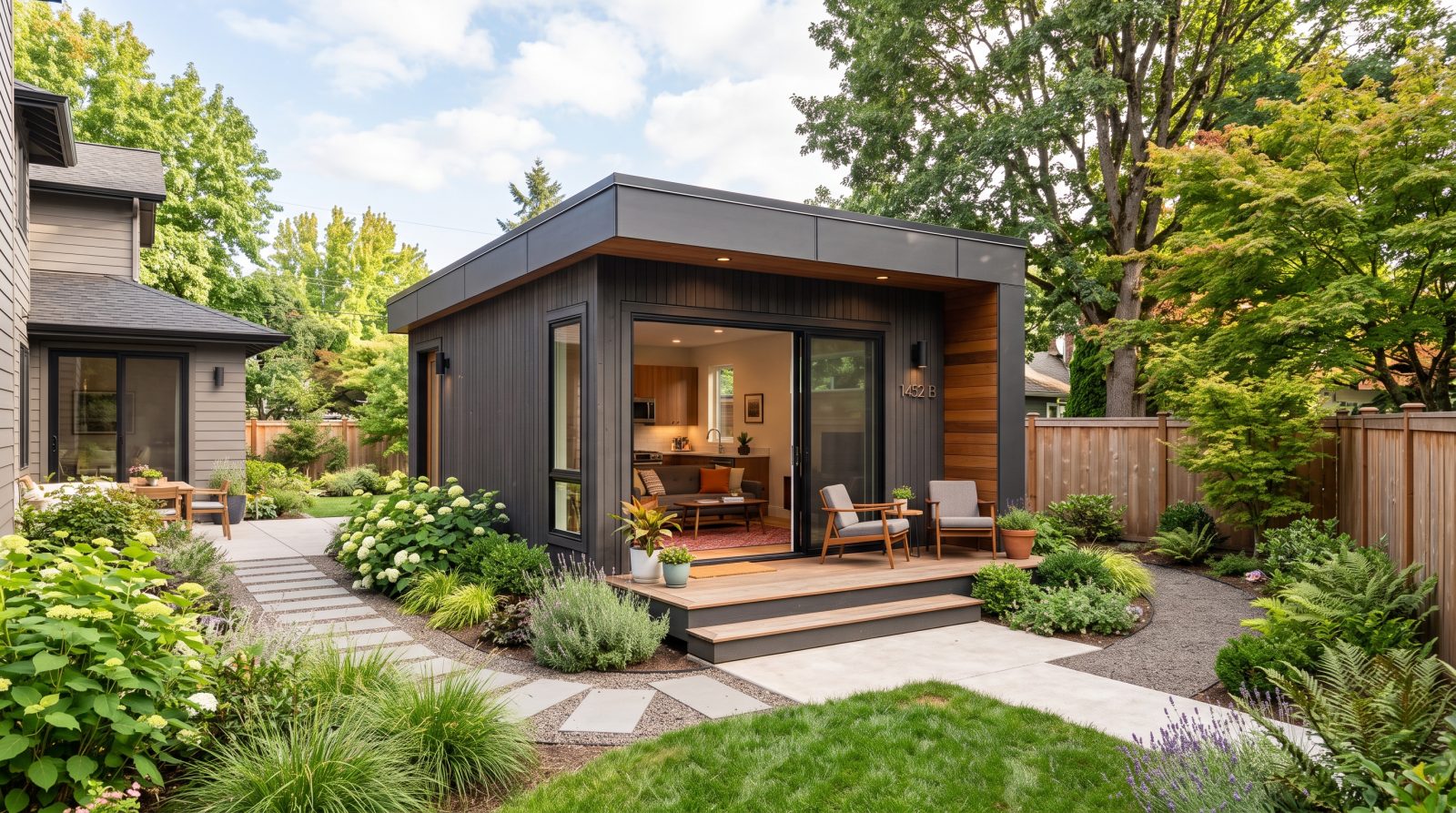
What is an ADU, and what types can you build?
An accessory dwelling unit is a complete, independent living space on a single-family or multi-family lot. To qualify as an ADU rather than a bedroom or bonus room, it needs its own kitchen, bathroom, sleeping area, and separate entrance. Bay Area homeowners typically choose from a few main types, and the type you pick drives most of your cost, timeline, and permit path.
Detached ADUs are standalone buildings — sometimes called backyard cottages, granny flats, or in-law units — built separately from the main house. Attached ADUs share at least one wall with the existing home. Conversion ADUs turn existing space, such as a garage, basement, or part of the house, into a living unit, which is often the lower-cost route because the shell already exists. A junior ADU (JADU) is a smaller unit of up to 500 square feet created within the walls of the existing home, usually with its own entrance and a small kitchen.
Each type interacts differently with your lot size, setbacks, and utility connections, so it's worth comparing a few before committing. A garage conversion may avoid new foundation work, while a detached new build gives you more design freedom but adds site work and utility runs.
- Detached ADU: standalone backyard unit; most design flexibility, typically higher cost
- Attached ADU: shares a wall with the main house; can share some systems
- Conversion ADU: garage, basement, or interior space converted into a unit; often lower cost
- Junior ADU (JADU): up to 500 sq ft within the existing home, with its own entrance
How much does ADU construction cost in the Bay Area?
ADU costs vary widely based on type, size, finishes, and site conditions, so treat any single number as a starting point rather than a quote. As a typical industry range for the Bay Area, garage and interior conversions often fall on the lower end, attached units in the middle, and detached new-construction ADUs on the higher end because they require their own foundation, roof, and full utility connections. Many full detached ADU projects in this region commonly land somewhere in the low-to-mid six figures by the time design, permits, site work, and finishes are included.
Beyond the per-square-foot build cost, budget for several line items that homeowners often overlook. Design and engineering fees, city permit and impact fees, utility connections or upgrades (water, sewer, gas, and electrical panel capacity), site preparation, and landscaping or restoration after construction all add up. Steep lots, poor soil, long utility runs, and high-end finishes push costs upward.
Because these are estimates and not quotes, the most reliable way to budget is to get multiple itemized bids from local contractors who can walk your specific site. Comparing detailed bids also helps you see how each contractor handles allowances, change orders, and contingencies.
- Conversions (garage/interior) typically cost less than new detached builds
- Plan for design, engineering, permit, and impact fees on top of construction
- Utility connections and electrical panel upgrades are common added costs
- Site conditions (slope, soil, access) and finish level significantly affect the total
- All figures are typical estimates — get itemized bids for real numbers
What permits and approvals does an ADU require?
Nearly every ADU in California requires a building permit, and most also involve planning or zoning review. California has passed a series of state ADU laws that limit how much local governments can restrict ADUs — for example, by setting maximum review timelines, easing some parking requirements, and allowing certain ADUs by right on eligible lots. Even so, your specific city or county still administers the process and applies local standards for setbacks, height, fire safety, and design.
A typical permit package includes architectural drawings, a site plan, structural details, and Title 24 energy compliance documentation. Depending on your jurisdiction and unit type, you may also deal with school or impact fees, utility connection requirements, and inspections at framing, electrical, plumbing, and final stages. Some Bay Area cities offer pre-approved ADU plan sets that can shorten review time if your site fits.
This page is educational and not legal advice. ADU rules change and differ by jurisdiction, so verify current requirements with your local building and planning department — or work with a contractor or designer who pulls permits in your city regularly and can confirm what applies to your lot.
- A building permit is required for essentially all ADUs; many need planning review too
- State ADU laws set baseline protections, but local rules still govern setbacks, height, and design
- Permit packages typically include drawings, a site plan, structural details, and Title 24 docs
- Verify current permit and fee requirements with your local building department before you start
How long does it take to build an ADU?
A realistic ADU timeline spans from a few months for a straightforward conversion to well over a year for a detached new build, and it breaks down into predictable phases. Design and engineering typically come first, followed by permit submittal and review, then construction, and finally inspections and sign-off. Permit review timelines are shaped by state law but still vary city to city, and a complete, well-prepared application moves faster than one that gets sent back for corrections.
Construction itself often runs several months for a detached unit, less for a conversion that reuses an existing shell. Lead times on materials, contractor availability, weather, and any mid-project changes can extend the schedule. Utility connections and special inspections sometimes add waiting periods that are outside your contractor's direct control.
To keep things on track, finalize your design and selections before construction starts, respond quickly to any permit corrections, and ask each contractor for a written schedule with milestones. A clear scope and few change orders are the biggest levers for staying close to the original timeline.
- Conversions are usually the fastest; detached new builds take the longest
- Phases: design and engineering, permitting, construction, then inspections
- Material lead times, weather, and change orders can extend the schedule
- A complete permit application and locked-in design help avoid delays
How do you choose an ADU contractor in the Bay Area?
Choosing the right contractor matters more on an ADU than on many smaller projects, because an ADU is effectively a small house with its own structure, systems, and inspections. Look for contractors with direct ADU experience in your jurisdiction who can speak clearly to your local permit process, and ask to see examples of comparable completed units. Get more than one itemized bid so you can compare scope line by line rather than just a bottom-line number.
Before hiring, confirm that any contractor you're considering is properly licensed and carries appropriate insurance for the work — you can verify a California contractor's license status through the Contractors State License Board (CSLB), and you should always check current standing yourself rather than relying on claims. A written contract should spell out scope, payment schedule, timeline, allowances, and how change orders are handled. Be cautious of bids that come in far below the others, large upfront deposits, or vague scopes of work.
Because Contractors Near Me doesn't perform the construction itself, our role is to help you connect with local contractors so you can gather and compare those bids. When you're ready, request a free quote and we'll help match you with contractors who build ADUs in your part of the Bay Area.
- Prefer contractors with ADU experience in your specific city or county
- Verify license status and insurance independently (CSLB for California licenses)
- Get multiple itemized bids and a written contract covering scope, schedule, and change orders
- Be wary of unusually low bids, large upfront deposits, or vague scopes