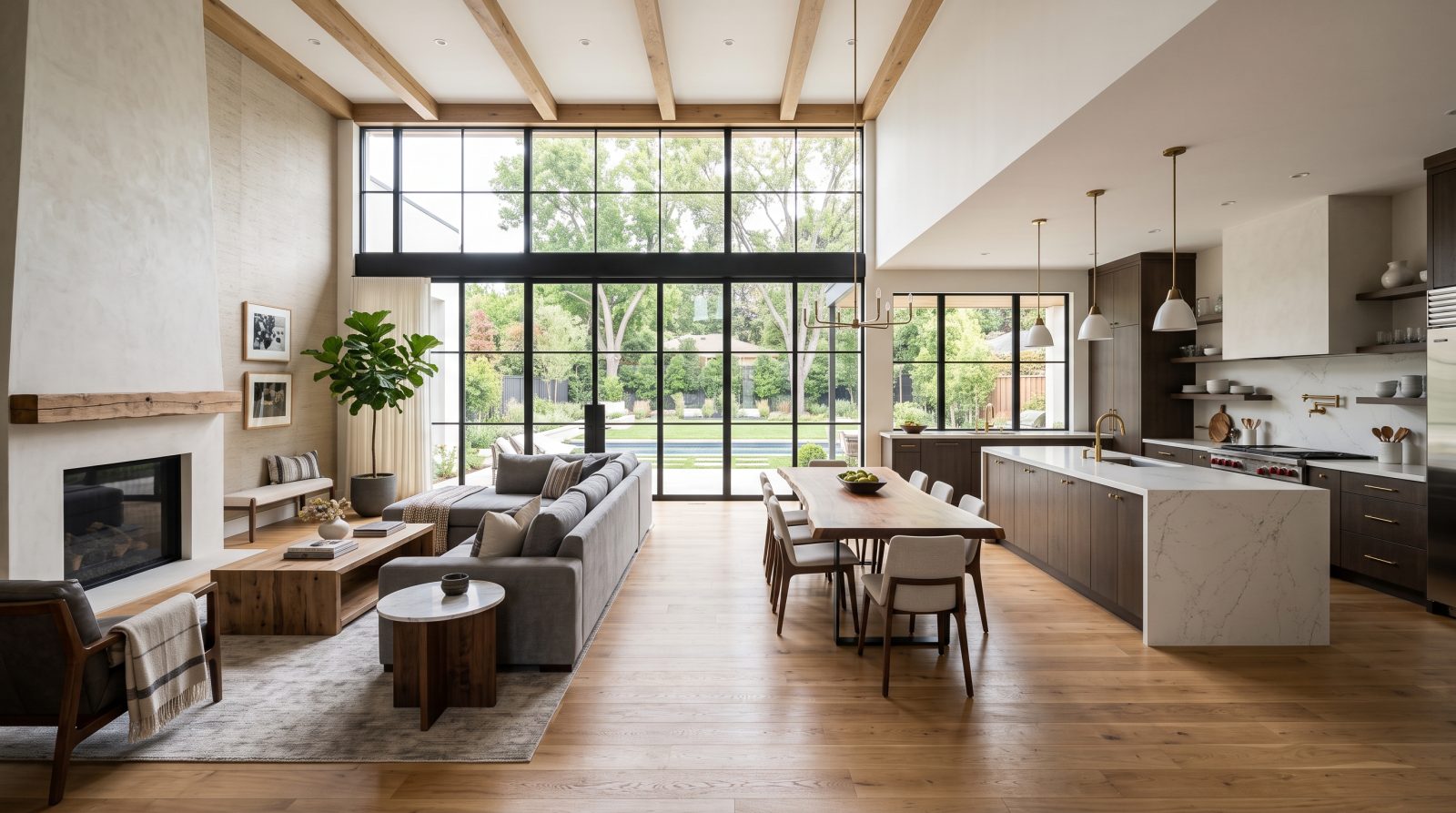
How much does a kitchen remodel cost in the Bay Area?
For most Bay Area homeowners, a kitchen remodel falls into one of three broad tiers. A cosmetic refresh that keeps the existing layout and refaces or repaints cabinets, swaps countertops, updates the backsplash, and changes fixtures and hardware typically runs in the $25,000–$50,000 range. A mid-range remodel that replaces cabinetry, installs new quartz or granite countertops, updates appliances and flooring, and makes modest layout tweaks typically falls in the $50,000–$120,000 range. A high-end or full-custom kitchen with moved walls, premium custom cabinetry, luxury appliances, and high-end stone can run above $120,000, sometimes well into the six figures.
Another way contractors and cost guides express this is per square foot. Bay Area kitchen remodels are commonly quoted in the range of roughly $250 to $500 per square foot, with custom work going higher. All of these figures are typical industry estimate ranges drawn from published 2026 cost guides, not quotes. Your actual cost depends on your kitchen's size, condition, and the specific products you choose, so treat these numbers as a starting point for budgeting rather than a price.
- Cosmetic refresh (refacing, new counters, backsplash, fixtures): typically $25,000–$50,000
- Mid-range remodel (new cabinets, stone counters, appliances, flooring, minor layout changes): typically $50,000–$120,000
- High-end / full custom (structural changes, custom cabinetry, luxury finishes): typically $120,000+
- Per-square-foot rule of thumb: roughly $250–$500+, higher for custom work
Where does the money actually go in a kitchen remodel?
Understanding how a kitchen budget breaks down helps you see where you can save and where costs are hard to avoid. Across the industry, cabinetry is usually the single largest line item, often cited at around 29% to 40% of the total budget. Labor is the next big share, commonly 20% to 35% of the project. Countertops, appliances, flooring, lighting, plumbing, and the backsplash make up most of the rest, with each typically a smaller slice.
These percentages are typical industry averages and will shift with your choices. For example, if you keep your existing cabinet boxes and reface them instead of replacing them, you can meaningfully reduce the largest line item. If you move plumbing or electrical, add or remove walls, or upgrade the electrical panel, labor and the share spent on trades like plumbers and electricians can climb.
- Cabinetry: often the biggest single cost, roughly 29%–40% of the budget
- Labor: commonly 20%–35% of the total project
- Countertops: frequently around 10% of the budget
- Appliances, flooring, lighting, plumbing fixtures, and backsplash: the remaining share
- Permits, design, and project management: smaller but real line items to plan for
Why do Bay Area kitchen remodels cost more than the national average?
Kitchen remodel costs in San Francisco, the Peninsula, the South Bay, and the East Bay generally sit above national averages, and that gap comes mostly from labor and local requirements rather than the materials themselves. Skilled-trade labor is in high demand here, and published 2026 guides commonly cite general contractor labor in the range of roughly $80–$150 per hour, with specialized trades like plumbers and electricians sometimes quoted up to around $250 per hour. Those rates flow directly into your total.
Older Bay Area housing stock adds cost too. Many homes in cities like San Francisco, Oakland, Berkeley, and the older neighborhoods of San Jose were built decades ago, so opening up a kitchen can surface outdated wiring, galvanized plumbing, or knob-and-tube that has to be brought up to current code. Permit and inspection requirements vary by city and jurisdiction, and you should verify what your specific city requires. These local realities are a big part of why a like-for-like kitchen costs more here than in many other parts of the country.
- High demand for skilled trades pushes hourly labor rates up
- Older homes can hide wiring, plumbing, or code issues that add scope
- Permit and inspection rules differ by city and jurisdiction and should be verified locally
- Tight access in dense neighborhoods can raise demolition, parking, and disposal costs
What can change your kitchen remodel cost the most?
A handful of decisions move the budget far more than the rest. The biggest is whether you keep your existing layout or change it. Leaving plumbing, gas, and major electrical where they are keeps costs down; relocating the sink, range, or refrigerator, or removing a wall to open up the space, adds trade labor and often triggers permits. The second biggest is cabinetry: refacing or refinishing existing boxes is far less expensive than new stock cabinets, which in turn cost less than semi-custom or fully custom cabinetry.
Material and appliance choices are the third major lever. Countertop material alone can swing thousands of dollars between laminate, mid-range quartz or granite, and premium stone. Appliance packages range from standard to professional-grade. Because these choices stack, two kitchens of the same size can land at very different totals. The smartest move is to decide early which one or two upgrades matter most to you and where you are comfortable choosing mid-range options, then have local contractors estimate that exact scope.
- Keeping vs. changing the layout (moving the sink, range, fridge, or walls)
- New cabinets vs. refacing existing ones, and stock vs. semi-custom vs. custom
- Countertop material: laminate vs. quartz/granite vs. premium stone
- Appliance tier: standard vs. professional-grade
- Hidden conditions in older homes uncovered during demolition
How do you budget for a kitchen remodel and get accurate pricing?
Start by setting a realistic target range using the tiers above, then build in a contingency for surprises. A common rule of thumb is to hold back roughly 10% to 20% of your budget for unexpected conditions, since older Bay Area kitchens often reveal issues once the walls and floors are opened up. Decide your must-haves versus nice-to-haves before you talk to contractors, because a clear scope is what makes estimates comparable.
To get pricing you can actually trust, ask for written, itemized estimates from a few licensed local contractors for the same defined scope. An itemized estimate lets you compare cabinetry, countertops, labor, and allowances line by line rather than just comparing bottom-line numbers. Confirm what is included, what is an allowance you could exceed, and how change orders are handled. The estimate ranges on this page are general budgeting information for planning only, not legal, financial, or contractual advice; your real cost comes from those local quotes. You can request a free quote to start gathering local estimates for your specific kitchen.
- Set a target tier, then reserve about 10%–20% for unexpected conditions
- Write down your must-haves vs. nice-to-haves so every bid prices the same scope
- Get itemized, written estimates from a few licensed local contractors
- Check what is included vs. an allowance, and how change orders are priced
- Verify licensing, permits, and insurance requirements for your specific city