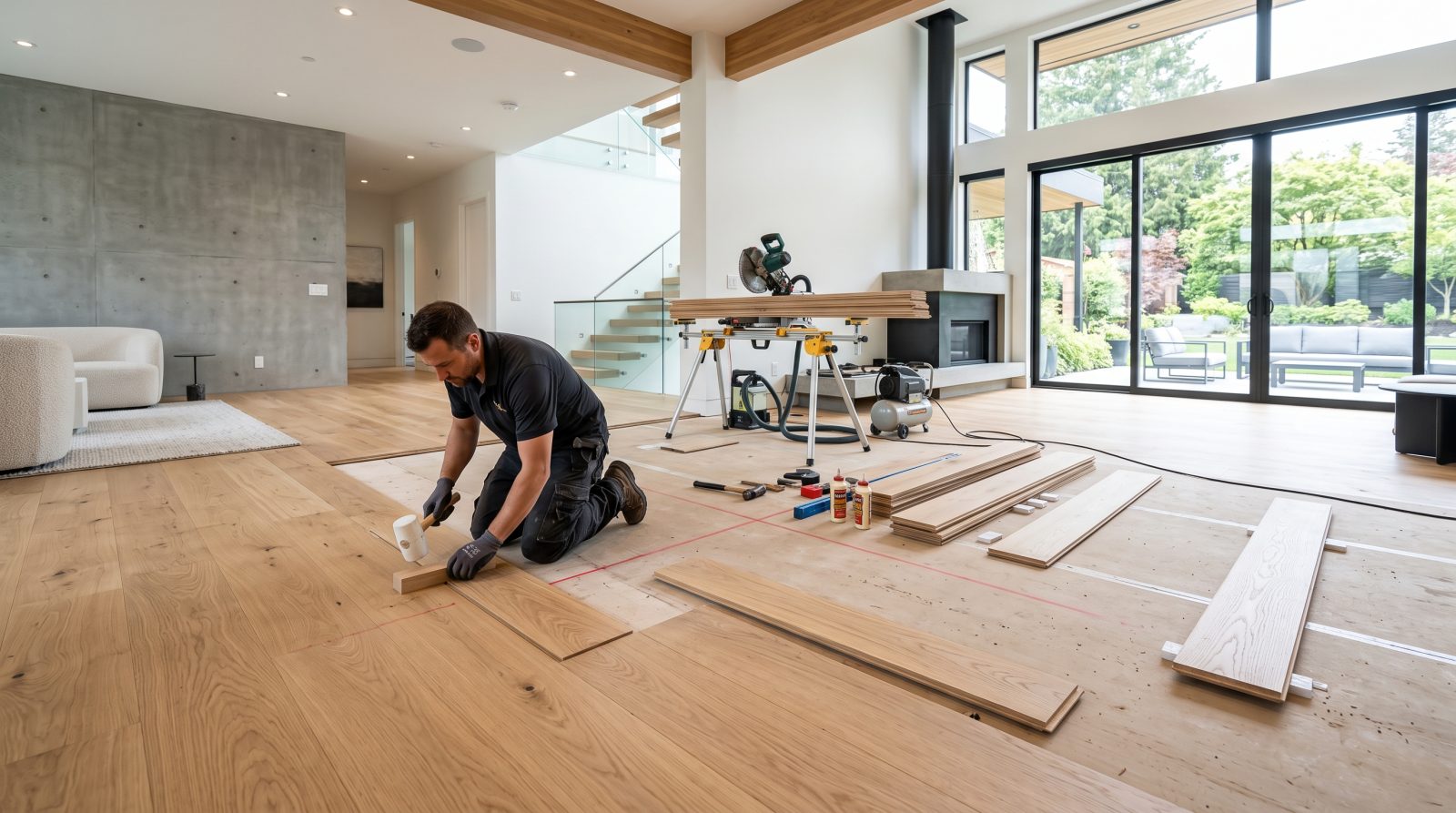
What does a flooring installation project include?
A complete flooring installation is more than just laying down a new surface. A typical scope covers several stages, and understanding them helps you compare quotes fairly between contractors. When you request quotes through Contractors Near Me, ask each contractor to spell out exactly which of these steps are included so you are comparing like for like.
Removal and disposal of old flooring is often a separate line item, especially if you have glued-down tile, multiple layers, or carpet and padding that need hauling away. Subfloor inspection and prep is the stage many homeowners overlook: contractors check for moisture, level the surface, and repair or replace damaged subfloor, which matters a great deal in older Bay Area homes built over crawl spaces or on concrete slabs.
- Old flooring removal and haul-away (often priced separately)
- Subfloor inspection, moisture check, leveling, and minor repairs
- Underlayment, moisture barrier, or sound barrier where appropriate
- Layout planning, cutting, and the actual installation
- Trim, transitions, thresholds, and baseboard/quarter-round work
- Final cleanup and a walkthrough to check the finished result
How much does flooring installation cost in the Bay Area?
Flooring costs depend heavily on the material you choose, the size and layout of the space, the condition of your subfloor, and whether old flooring needs to be removed. The figures below are typical industry estimate ranges to help you budget; they are not quotes and not guaranteed pricing. Bay Area labor and material costs can run higher than national averages, so treat these as a starting point and rely on a written quote from a local contractor for real numbers.
As a rough planning guide, installed pricing (material plus labor) often lands in these ranges: laminate and entry-level luxury vinyl plank around $3 to $8 per square foot; mid-grade LVP and engineered wood around $6 to $12 per square foot; solid hardwood around $8 to $15+ per square foot; and tile around $7 to $20+ per square foot depending on the tile and the complexity of the layout. Carpet with padding commonly falls around $3 to $7 per square foot installed. Stairs, intricate patterns, extensive subfloor repair, and premium materials can push costs above these ranges.
- Material grade is usually the biggest single cost driver
- Subfloor leveling or repair adds cost and is common in older homes
- Old-floor removal, furniture moving, and haul-away are often extra
- Stairs, diagonal or herringbone layouts, and tight cuts raise labor
- Always confirm whether a quote is material-only, labor-only, or installed
Which flooring material is right for your home?
The right flooring depends on the room, your household, your budget, and how long you plan to stay; no single option suits every situation. Below is a plain-language comparison to help you narrow the choices before talking to a contractor. A local flooring pro can also tell you which materials hold up well given Bay Area conditions, such as homes near the coast with higher humidity versus inland areas with bigger temperature swings.
Luxury vinyl plank is popular for its water resistance and durability, making it a frequent pick for kitchens, bathrooms, and homes with kids or pets. Engineered hardwood offers the look of real wood with better stability over concrete slabs and in variable humidity. Solid hardwood is prized for longevity and the ability to be refinished over decades, but it is more sensitive to moisture. Tile is durable and water-resistant for wet areas, while carpet stays a comfortable, budget-friendly option for bedrooms.
- Luxury vinyl plank (LVP): water-resistant, durable, good for high-traffic and wet areas
- Engineered hardwood: real-wood look, more stable over slabs and humidity changes
- Solid hardwood: long-lasting and refinishable, but more moisture-sensitive
- Tile: highly durable and water-resistant, ideal for bathrooms and entryways
- Laminate: budget-friendly wood look, generally less water-tolerant than LVP
- Carpet: soft and affordable, often chosen for bedrooms and quiet spaces
How long does flooring installation take?
For a single typical Bay Area room with a sound subfloor, professional installation often takes about one to three days once materials are acclimated and on site. Whole-home or multi-room projects can run a week or more. These are typical timelines, not guarantees; your contractor should give you a project-specific schedule in writing.
Several factors can extend the timeline. Many wood and laminate products need to acclimate in your home for a few days before installation so they adjust to indoor humidity. Subfloor repairs, moisture remediation, or leveling add time. Tile requires curing time for mortar and grout. Custom patterns, stairs, and large square footage also lengthen the job. Coordinating furniture removal and arranging the space ahead of time can help the work go smoothly.
Do you need a permit or licensed contractor for new floors?
Most straightforward flooring replacements in the Bay Area are finish work and do not, on their own, require a building permit. However, related work often does: structural subfloor repair, plumbing or electrical changes, removing materials in older homes that may contain hazardous substances, or significant alterations can trigger permit and inspection requirements. Rules and fees vary by city and county, so verify the specifics with your local building department before work begins. This information is educational and not legal advice.
Licensing also matters. In California, contractors performing work above a set dollar threshold are generally required to hold a state license, and many homeowners prefer to hire licensed, insured professionals regardless of project size. We do not publish individual license numbers or insurance details on this page, so ask each contractor directly for their current CSLB license status and proof of insurance, and verify it independently before hiring. Contractors Near Me connects you with local contractors; confirming credentials and permits is an important step you should complete before signing any contract.