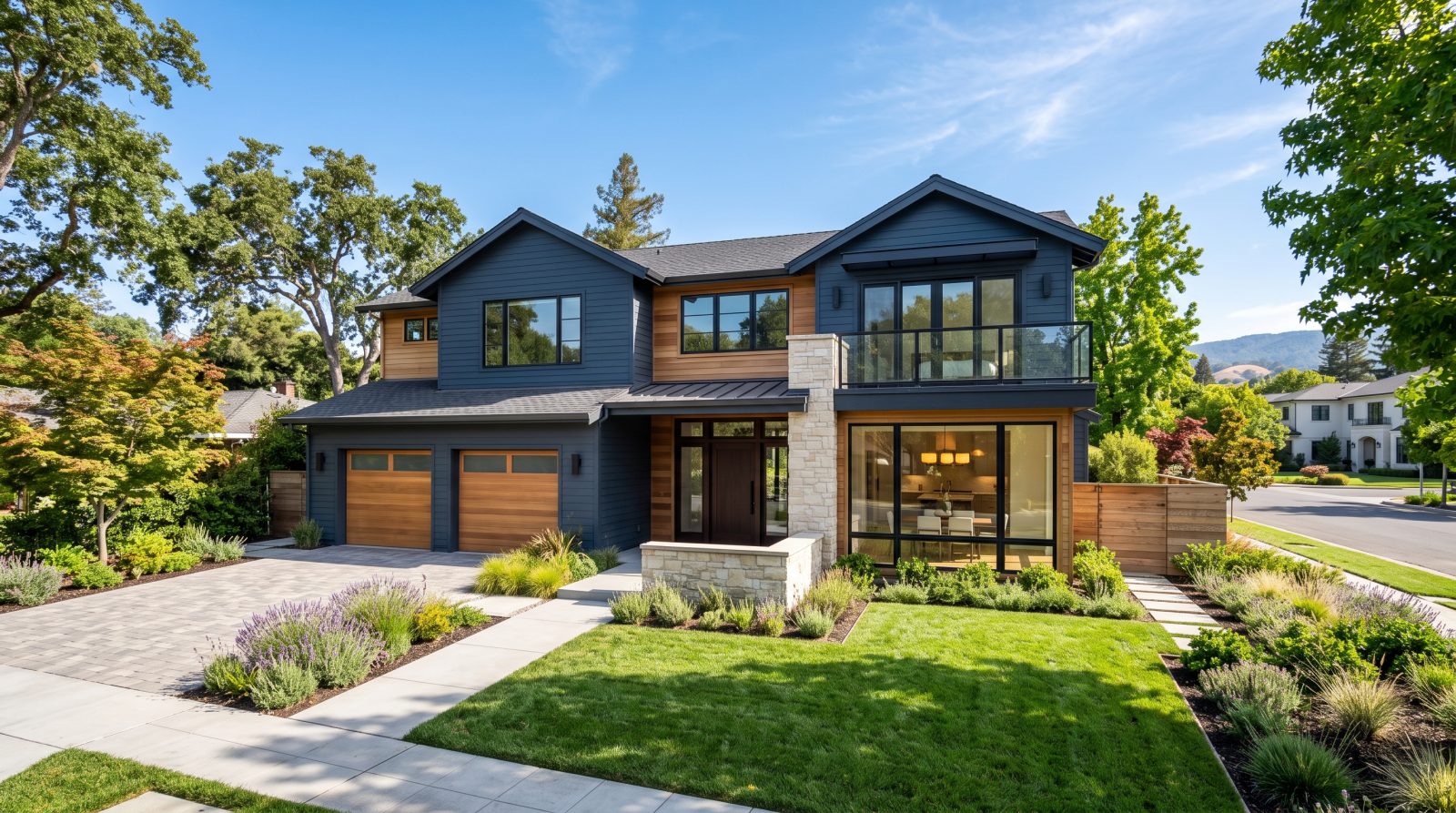
What home remodeling looks like in Mountain View
Mountain View's housing stock shapes nearly every remodeling conversation. Large parts of the city were built out during the post-war boom, so single-story ranch and mid-century homes are common in neighborhoods like Cuesta Park, Waverly Park, Monta Loma, and the Willows. Monta Loma in particular is known for its Eichler and Eichler-style homes from the 1950s. These properties often have original layouts, smaller closed-off kitchens, single-pane windows, and older electrical panels, which is why kitchen reconfigurations, opening up walls, window replacement, and electrical upgrades are some of the most-requested projects.
Closer to downtown, Old Mountain View blends older bungalows and cottages with newer construction, and lots can be narrow with detached garages, common candidates for garage conversions and accessory dwelling units (ADUs). In North Bayshore and the newer developments near the tech corridor, you'll see more contemporary homes, condos, and townhomes where remodels lean toward finish upgrades, smart-home wiring, and outdoor living spaces. A contractor who knows Mountain View will scope your project against your home's era and your specific neighborhood rather than applying a one-size template.
Because lot sizes and zoning differ across the city, the same idea, say, adding a bedroom, can mean a bump-out addition on one lot and a second-story addition on another. Bringing a local general contractor in early helps you understand what's realistic for your parcel before you commit to a plan.
- Common Mountain View projects: kitchen and bathroom remodels, room additions, ADUs and garage conversions, window and door replacement, electrical panel upgrades, and outdoor/deck work
- Older ranch and mid-century homes often need updated wiring, insulation, and plumbing alongside cosmetic changes
- Downtown-adjacent lots frequently suit ADUs; newer homes near North Bayshore lean toward finish and systems upgrades
Permits and jurisdiction: how building approval works in Mountain View
In Mountain View, most structural, electrical, plumbing, and mechanical work requires a permit from the City of Mountain View Community Development Department, which handles planning and building services for properties inside city limits. Building permits are submitted electronically through the city's online permit portal rather than on paper. Typical permit-triggering projects include additions, ADUs, kitchen and bathroom remodels that move plumbing or electrical, window replacements, water heater and HVAC changes, electrical panel upgrades, and structural alterations. Simple cosmetic work like painting or replacing cabinets in the same footprint usually does not, but it's worth confirming because rules change and details matter.
Some projects also pass through a planning or zoning review before a building permit is issued, especially additions that affect height, setbacks, or lot coverage, and ADUs, which California has streamlined statewide but which still must meet local standards. A licensed general contractor familiar with Mountain View typically manages the permit application, coordinates required inspections, and schedules them at the right construction milestones.
Treat anything on this page as general guidance, not legal advice. Permit requirements, fees, and review steps are set by the city and the state and should be verified directly with the City of Mountain View before you commit to a scope or schedule. Confirming the permit path up front protects you at resale and at inspection.
- Permits are issued by the City of Mountain View Community Development Department for work inside city limits
- Building permit applications are filed electronically through the city's online portal
- Additions, ADUs, and remodels that move plumbing/electrical generally require permits and inspections
- Additions and ADUs may need planning/zoning review for setbacks, height, and lot coverage
- Always verify current permit requirements and fees directly with the city
Typical timelines and cost ranges for Mountain View projects
Costs in the Mountain View area tend to run higher than national averages because of Bay Area labor rates, material costs, and demand, and because older homes often reveal hidden conditions once walls are opened. The ranges below are typical industry estimates to help you plan, not quotes. Your actual price depends on size, finish level, structural and systems work, permit requirements, and current market conditions, so always get a written, itemized estimate from a licensed contractor.
Timelines also shift based on permitting, material lead times, and whether you're living in the home during construction. A straightforward bathroom refresh may wrap in a few weeks, while a permitted addition or ADU commonly spans several months from design through final inspection. Build in buffer time: design and permitting can take as long as the construction itself, particularly for additions that need planning review.
A good Mountain View contractor will walk you through a realistic schedule, flag where older-home surprises (knob-and-tube wiring, outdated plumbing, settling foundations) could affect both cost and timeline, and explain how change orders are handled before a single wall comes down.
- Bathroom remodel: typically several weeks of active work; mid-to-high four figures up into the low-to-mid five figures depending on size and finishes (estimate range, not a quote)
- Kitchen remodel: often a few weeks to a couple of months; mid five figures and up for a full gut-and-reconfigure in this market (estimate range)
- Room addition or ADU: commonly several months from design through final inspection; one of the larger investments a homeowner makes (estimate range)
- Hidden conditions in older homes (wiring, plumbing, foundation) can affect both budget and schedule, ask how change orders are handled
How to choose and verify a Mountain View contractor
The most important step before hiring anyone in California is verifying licensing. General contractors performing work above the state's minimum threshold are required to hold a license from the Contractors State License Board (CSLB), and you can check a contractor's license status, classification, and any bond or workers' compensation information directly through the CSLB. Ask for the license number, then confirm it yourself rather than taking it on faith. Also confirm the contractor carries appropriate liability insurance and, if they have employees, workers' compensation coverage.
Beyond credentials, look for a contractor who communicates clearly and puts the important things in writing: a detailed scope, an itemized estimate, a payment schedule tied to milestones, and how changes will be priced. In California, be cautious about large upfront deposits, the state limits how much a contractor can ask for before work begins, so a reasonable, staged payment plan is a good sign. Get multiple estimates so you can compare scope and approach, not just the bottom-line number.
For Mountain View specifically, favor contractors who already know the local permit and inspection process and who have experience with your home's vintage, whether that's a mid-century ranch in Cuesta Park or a downtown bungalow. When you request quotes through Contractors Near Me, you can describe your project and neighborhood so you're matched with contractors suited to the work, then do your own license and reference checks before signing anything.
- Verify the contractor's license, classification, and bond/insurance status through the CSLB before hiring
- Get a written, itemized estimate, a milestone-based payment schedule, and a clear change-order process
- Be wary of large upfront deposits; California caps how much can be collected before work starts
- Compare multiple quotes on scope and approach, and choose contractors familiar with Mountain View permits and your home's era