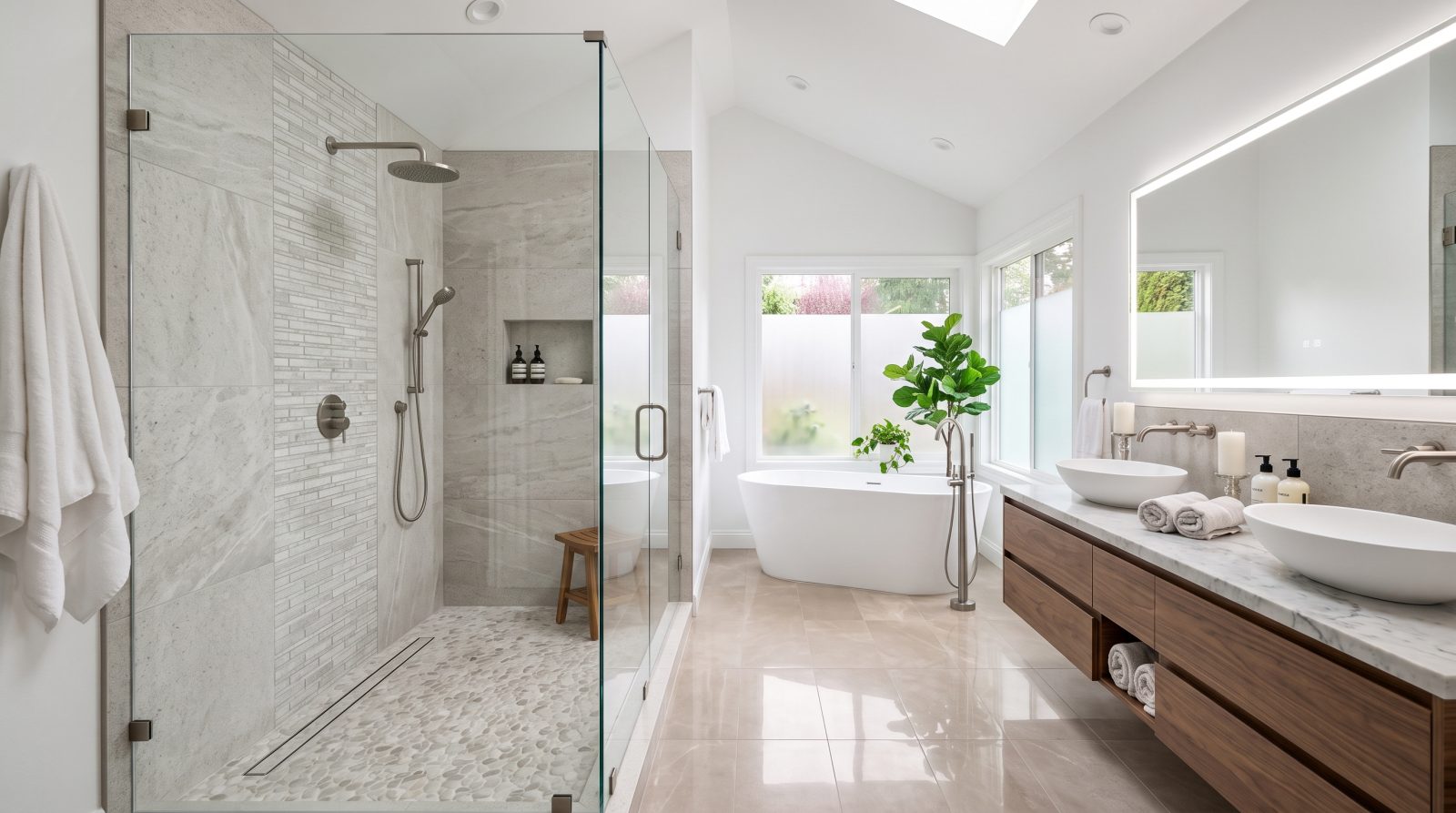
What does a bathroom remodel include?
A bathroom remodel can mean very different scopes of work, and understanding which one fits your goals is the first step to a realistic budget and timeline. Knowing the category up front also helps a contractor give you a more accurate quote, because the cost difference between a cosmetic update and a layout change is substantial.
Broadly, projects fall into three tiers. A cosmetic refresh keeps the existing footprint and plumbing in place. A mid-range remodel replaces most surfaces and fixtures and may include minor plumbing or electrical work. A full remodel can involve moving walls, relocating plumbing, and reconfiguring the entire room. The more you move plumbing and electrical, the more trades, time, and permitting the project requires.
- Cosmetic refresh: new vanity, faucet, toilet, light fixtures, mirror, paint, and sometimes new flooring or a re-tiled wall, with no change to the layout or plumbing locations.
- Mid-range remodel: new tub or shower, tile surround, flooring, vanity and countertop, exhaust fan, and updated fixtures, often with minor plumbing and electrical updates.
- Full remodel: relocating the toilet, sink, or shower, removing or moving a wall, converting a tub to a curbless walk-in shower, upgrading the subfloor, and reworking plumbing and electrical to code.
- Common add-ons: heated floors, niche shelving, frameless glass enclosures, double vanities, improved ventilation, and accessibility features such as grab bars or a zero-threshold entry.
How much does bathroom remodeling cost in the Bay Area?
Bathroom remodeling costs in the San Francisco Bay Area vary widely based on scope, the size of the room, the quality of materials, and how much plumbing or electrical work is involved. As a general budgeting guide, a cosmetic refresh commonly lands in the low-to-mid thousands, a mid-range remodel in the tens of thousands, and a full gut-and-reconfigure can run considerably higher, especially in a primary bathroom or in older Bay Area homes that need updated wiring or plumbing. These are typical industry ranges to help you plan, not quotes, and your actual price depends on your specific home and material choices.
Bay Area labor and material costs tend to run higher than national averages, so it is wise to budget on the upper end of any general range you see online and to set aside a contingency for surprises behind the walls. A written, itemized estimate from a licensed contractor who has seen the space in person is the only way to know your real number.
- Biggest cost drivers: moving plumbing or electrical, tile area and complexity, fixture and material grade, and whether the layout changes.
- Hidden costs often found in older homes: outdated wiring, galvanized or corroded pipes, water damage, mold, or a subfloor that needs replacing.
- Set aside a contingency (a common rule of thumb is roughly 10 to 20 percent of the budget) for issues discovered once demolition begins.
- Ask each contractor for a line-item estimate so you can compare materials, labor, and allowances rather than just a single bottom-line figure.
How long does a bathroom remodel take?
Most bathroom remodels take roughly two to six weeks of active construction once materials are on site, though the full project timeline from first call to finished room is usually longer. Planning, design decisions, material ordering, and permitting often add several weeks before any demolition starts. A cosmetic refresh can sometimes wrap in a week or two, while a full remodel that relocates plumbing and changes the layout typically sits at the longer end and occasionally beyond.
Timelines stretch when materials are on backorder, when inspections need to be scheduled and passed between phases, or when unexpected conditions, such as hidden water damage, are uncovered during demolition. Ordering tile, fixtures, and the vanity well before the start date is one of the most reliable ways to keep a project on schedule.
- Planning and design: choosing layout, fixtures, and finishes, plus getting and comparing quotes.
- Permitting: applications and approvals, which depend on your city or county and the scope of work.
- Demolition and rough-in: removing old materials, then plumbing, electrical, and framing, usually followed by an inspection.
- Finishes: waterproofing, tile, flooring, vanity, fixtures, paint, and a final inspection where a permit applies.
Do you need a permit for a bathroom remodel?
In general, a bathroom remodel that changes plumbing, alters electrical wiring, moves or adds fixtures, or modifies the structure requires a building permit from your local city or county building department. Purely cosmetic work, such as swapping a faucet, replacing a vanity in the same spot, or painting, often does not. Permit rules and fees vary by jurisdiction across the Bay Area, so the only reliable answer for your project is to confirm with your local building department or have your contractor verify before work begins.
Permits exist to confirm that work meets current building, plumbing, and electrical codes, which protects your safety and your home's value. Permitted work that passes inspection also creates a documented record, which can matter when you sell. A licensed contractor will typically pull the required permits and coordinate inspections as part of the job. This page is educational and not legal advice; always verify licensing and permit requirements for your specific situation.
When hiring, it is reasonable to ask a contractor to confirm they are licensed for the work and that they will handle the necessary permits and inspections. In California, you can independently verify a contractor's license status through the Contractors State License Board (CSLB).
- Usually needs a permit: relocating fixtures, new plumbing or electrical, removing or moving walls, or converting a tub to a shower.
- Often does not need a permit: like-for-like fixture swaps, painting, or replacing a vanity in the same location, though local rules vary.
- Verify before you start: contact your city or county building department, or have your contractor confirm the requirements for your scope.
- Verify the contractor: confirm licensing for the trade involved and check the license independently through the CSLB.
How to plan your bathroom remodel and get a quote
Good planning makes a bathroom remodel smoother and helps you get more accurate, comparable quotes. Before reaching out, it helps to define your priorities, set a realistic budget that includes a contingency, and gather examples of layouts and finishes you like. Deciding early whether you want to keep the existing layout or reconfigure the room is one of the most important choices, because it largely determines cost, timeline, and permitting.
When you request a quote, share the size of the bathroom, your wish list, your budget range, and photos of the current space. The more detail a contractor has, the more precise the estimate. Getting more than one written, itemized estimate lets you compare scope and value rather than price alone. When you're ready, you can request a free quote and we'll help connect you with a local contractor in the Bay Area.
- Define your must-haves versus nice-to-haves so trade-offs are clear if the budget tightens.
- Set a total budget and reserve a contingency for hidden conditions in older homes.
- Gather photos, rough measurements, and inspiration images to share with each contractor.
- Request written, itemized estimates and confirm licensing, permits, and timeline expectations before signing.
Frequently asked questions about bathroom remodeling
Below are answers to common questions Bay Area homeowners ask when planning a bathroom remodel. The figures and timelines here are typical industry ranges for planning purposes, not quotes, and your project may differ.