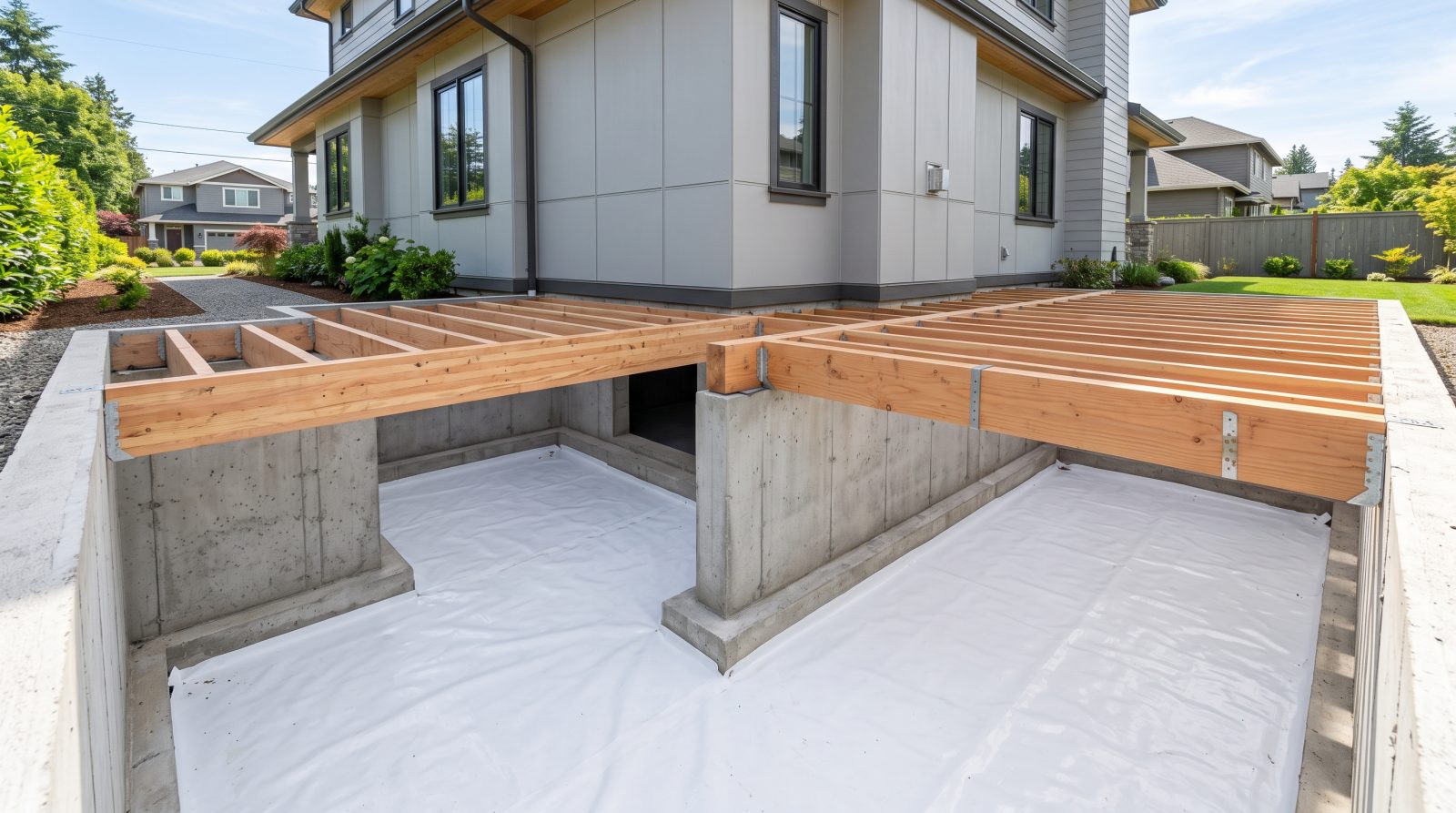
What does foundation and structural repair actually cover?
Foundation and structural repair is an umbrella term for work that restores or reinforces the load-bearing skeleton of a home. The foundation is the concrete (or, in older Bay Area homes, sometimes brick or unreinforced masonry) that transfers the building's weight into the soil. The structure above it includes the sill plate, cripple walls, posts, beams, joists, and wall framing that hold everything up. Repair becomes necessary when any of these settle unevenly, crack, rot, rust, pull apart at their connections, or were never adequately tied together in the first place.
On a practical level, projects in this category tend to fall into a few buckets: stabilizing a foundation that is settling or heaving, repairing or replacing damaged framing and supports, addressing water and drainage problems that undermine the soil, and seismic retrofitting to help a house ride out an earthquake. A single project can combine several of these, because the same conditions, such as poor drainage and old soft soils, often cause more than one symptom.
Because this work affects how a home carries weight, it usually deserves a careful diagnosis before any repair. Many Bay Area contractors will recommend a structural engineer's evaluation for anything beyond cosmetic cracks, and some repair methods are designed by an engineer and then installed by the contractor.
- Foundation stabilization: underpinning with piers, slab or footing repair, addressing settlement and heave
- Structural framing repair: replacing rotted sill plates, posts, beams, and joists; correcting sagging or bouncy floors
- Drainage and moisture control: French drains, regrading, sump systems, and crawl-space moisture management that protect the foundation
- Crack repair and waterproofing: sealing non-structural cracks and managing water intrusion in basements and crawl spaces
- Seismic retrofitting: foundation bolting, cripple-wall bracing, and soft-story reinforcement common in older Bay Area houses
What are the warning signs your home may need structural repair?
The earliest signs are usually small and easy to dismiss, which is exactly why they are worth paying attention to. Movement in a foundation or frame tends to show up as cracks, sticking openings, sloping floors, and gaps where building materials separate. One isolated hairline crack in stucco or drywall is often cosmetic, but a pattern of symptoms, or a crack that keeps widening, is a stronger reason to have the home looked at.
In Bay Area homes specifically, seasonal soil movement can make symptoms come and go. Expansive clay swells in the wet winter and shrinks in the dry summer, so you may notice doors that stick in one season and not another. Older homes built before modern codes may also have foundations that were never bolted to the framing, which is a seismic concern even when there is no visible damage. None of these signs proves a problem by itself, but together they help a contractor or engineer decide what to investigate.
- Stair-step cracks in brick, block, or stucco, especially wider than about a quarter inch
- Doors and windows that suddenly stick, won't latch, or show gaps at the corners
- Floors that slope, sag, feel bouncy, or have developed gaps between the floor and baseboards
- Cracks in foundation walls or slabs, particularly horizontal cracks or cracks that leak water
- Visible water intrusion, efflorescence, or persistent moisture in a basement or crawl space
- An older home that has never been bolted to its foundation or has an unbraced cripple wall
What repair methods do contractors typically use?
The right method depends entirely on the cause, so a reputable contractor diagnoses before prescribing. When a foundation has settled unevenly, contractors often underpin it by installing piers, either steel push piers driven to load-bearing soil or helical piers screwed into the ground, to transfer the home's weight past the unstable layer and, where possible, lift the structure back toward level. For minor settlement or voids under a slab, techniques like polyurethane foam injection or grouting may stabilize and raise the concrete.
Structural framing problems are usually solved by repairing or replacing the affected members: swapping out a rotted sill plate, sistering or replacing joists, adding posts and beams, or installing new footings under failing supports. Sagging or bouncy floors are commonly corrected by adjusting or adding supports in the crawl space. Drainage problems are addressed separately but often alongside, since keeping water away from the foundation is frequently what prevents the damage from returning.
Seismic retrofitting is its own well-defined category in the Bay Area. A typical retrofit anchors the wood framing to the concrete foundation with bolts or plates and braces the short cripple walls with structural sheathing, helping the house move with the ground instead of sliding off its foundation. Multi-unit buildings with parking or open ground floors may need a soft-story retrofit, which several Bay Area cities require by ordinance.
Because methods like underpinning and retrofitting are engineered systems, the specific product, spacing, and depth should be matched to your home and soil. Ask whether a structural engineer designed the repair and whether the work will be inspected.
- Push piers and helical piers for underpinning and stabilizing settled foundations
- Foam injection or grouting to fill voids and raise minor slab settlement
- Framing repair: sill-plate replacement, sistered or new joists, added posts and beams, new footings
- Crawl-space leveling and added supports to fix sagging or bouncy floors
- Drainage upgrades (French drains, regrading, sump systems) to remove the underlying cause
- Seismic retrofit: foundation bolting, cripple-wall bracing, and soft-story reinforcement
What do foundation and structural repairs typically cost?
Foundation and structural costs span a very wide range because the same label can describe a one-hour crack seal or a multi-week underpinning job. The figures below are typical ranges meant for planning, not price quotes. Your actual cost depends on the cause and severity, how easy the area is to access, soil conditions, whether an engineer's report and permits are required, and current local labor and material rates. The only way to get a real number is an on-site assessment and a written estimate.
As a rough orientation, small non-structural crack sealing and minor drainage tweaks tend to be the least expensive work, while underpinning with piers, extensive framing replacement, and full seismic or soft-story retrofits sit at the higher end. Many homeowners get more than one estimate, both to compare price and to compare how each contractor diagnoses the problem, since a cheaper repair that treats the symptom and not the cause can cost more over time.
- Sealing minor non-structural cracks: typically a few hundred dollars, depending on number and access (planning range, not a quote)
- Drainage improvements such as French drains or regrading: typically low-to-mid four figures, varies with length and site (planning range)
- Crawl-space floor leveling and added supports: typically mid four figures and up, depending on the area (planning range)
- Underpinning with piers: typically several thousand dollars per affected section, scaling with the number of piers and depth (planning range)
- Residential seismic retrofit (bolting and cripple-wall bracing): commonly low-to-mid four figures for a typical single-family home (planning range)
- Major structural rebuilds or soft-story retrofits: highly variable and often the largest cost; get an engineered scope and written bids (planning range)
How do permits, licensing, and inspections work in the Bay Area?
Most structural and foundation work in California requires permits, and the rules are set by your local city or county building department, not by the contractor. Underpinning, foundation replacement, significant framing changes, and seismic retrofits generally need a permit and at least one inspection; minor cosmetic crack sealing often does not. Many Bay Area jurisdictions also have streamlined permits for standard residential seismic retrofits that follow a prescriptive code standard. Always verify the current permit requirements with your own building department before work begins.
Contractors performing this work in California are generally expected to hold an appropriate state license for the trade, and you can verify a contractor's license status and standing through the California state licensing board before you hire. It is reasonable to ask for the license number, confirm it is active, and confirm the contractor carries the insurance the job calls for. This page is educational and is not legal advice, so treat licensing, permitting, and insurance details as items to verify directly with the relevant authorities for your situation.
Permits and inspections are a protection for you as the homeowner: an inspection provides an independent check that load-bearing work was done to code, and a properly permitted, inspected repair is far easier to document when you eventually sell. If a contractor suggests skipping permits on structural work, treat that as a reason for caution.
- Permits for structural and foundation work are issued by your local Bay Area city or county building department; verify requirements there
- Many jurisdictions offer a streamlined permit path for standard residential seismic retrofits
- Verify a contractor's California license status and standing with the state licensing board before hiring
- Ask for the license number, confirm it is active, and confirm appropriate insurance for the scope
- Permitted, inspected work creates a record that helps at resale and confirms code compliance
How to choose a foundation and structural repair contractor
Choosing well starts with the diagnosis, not the price. A trustworthy contractor will inspect the home, explain what is actually causing the symptoms, and recommend a repair that matches that cause, rather than selling a single product for every problem. For anything beyond cosmetic cracks, ask whether a structural engineer is involved in evaluating the home or designing the repair, since engineered repairs are matched to your specific soil and structure.
Get written estimates from more than one contractor and compare scope as carefully as you compare price. A clear estimate should describe the cause, the proposed method, what is and is not included, how the work will be permitted and inspected, and what kind of warranty is offered. Be cautious of high-pressure tactics, vague scopes, large up-front deposits, or any suggestion to skip permits on load-bearing work.
Contractors Near Me connects Bay Area homeowners with local foundation and structural repair pros. There is no phone number to call yet; instead, you can request a free, no-obligation quote and we will help you connect with a contractor who can assess your home.
- Prioritize contractors who diagnose the cause before recommending a fix
- Ask whether a structural engineer evaluates the home or designs the repair for non-cosmetic work
- Compare written estimates on scope, method, permits, inspection, and warranty, not just price
- Confirm license status and insurance, and avoid anyone who proposes skipping required permits
- Request a free quote through Contractors Near Me to connect with a local Bay Area pro