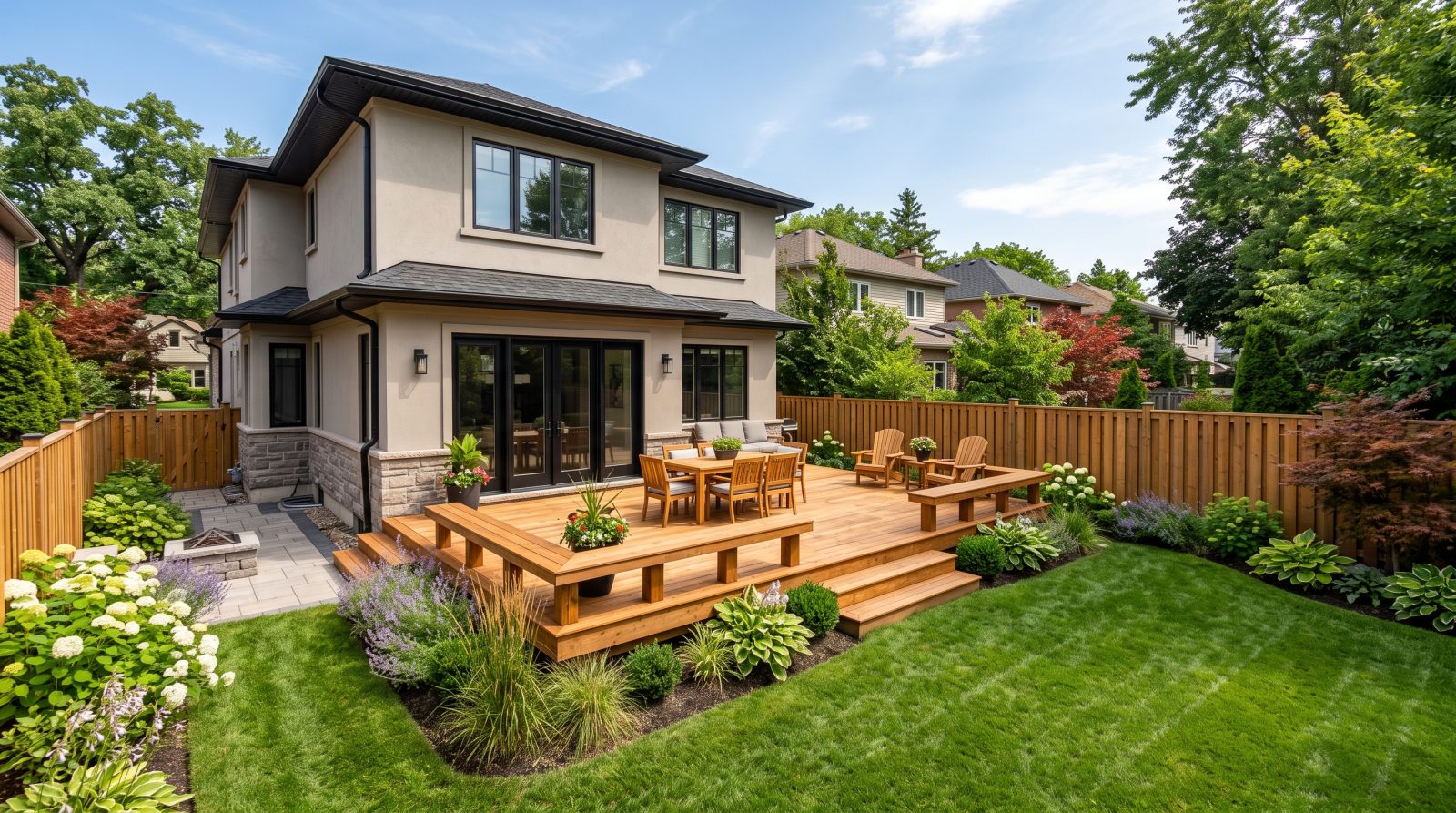
What does fencing and deck work include?
Fencing and decks are two related outdoor-construction services that local contractors often handle together, since both involve posts set in the ground, framing, and weather-exposed finishes. A fencing scope can mean a brand-new fence, a like-for-like replacement, a single damaged section, a sagging gate, or new posts after the old ones rot at the soil line. A deck scope ranges from a small ground-level platform to a multi-level raised deck with stairs, railings, and built-in seating, plus repairs such as replacing rotted boards, re-securing loose railings, or reinforcing a deck-to-house ledger connection.
A typical full installation usually includes a site visit and measurement, marking utility lines, digging and setting posts (often in concrete), framing, attaching pickets or decking boards, hanging gates or building stairs and railings, and hauling away the old material. On a deck, structural elements like footings, beams, joists, and the ledger board that ties the deck to the house carry the most safety weight and are exactly what an inspector looks at.
Because so much of the cost and safety lives below the surface and in the connections, a clear written scope matters. Ask each contractor to spell out post depth, footing type, hardware, board and railing materials, and who pulls any required permit, so you are comparing the same job rather than just a bottom-line number.
- New fences: wood (redwood, cedar, pressure-treated), vinyl, chain-link, ornamental metal, and horizontal-board styles common in the Bay Area
- Fence repair: replacing rotted posts, re-nailing or swapping pickets, fixing or rehanging gates, and straightening leaning sections
- New decks: ground-level platforms, raised decks, multi-level layouts, stairs, and railings
- Deck repair: replacing rotted or cracked boards, re-securing railings, and inspecting ledger and joist connections
- Finishing: staining, sealing, or painting wood to slow weathering
How much do fences and decks typically cost in the Bay Area?
Costs vary widely by material, size, height, ground conditions, and access, so treat the following as typical industry estimate ranges rather than a quote for your project. For fencing, wood fences commonly run about $25 to $50 per linear foot installed, vinyl often falls around $30 to $60 per linear foot, and chain-link is usually the lowest at roughly $15 to $35 per linear foot. Custom heights, decorative tops, and gates add to those figures. For decks, a pressure-treated wood deck often lands near $30 to $50 per square foot installed, while composite and premium hardwood decks frequently run about $40 to $70 per square foot or more.
Several Bay Area realities push projects toward the higher end of these ranges. Hillside lots and sloped yards mean taller posts, more footings, and harder digging. Older properties may have hard or rocky soil, buried debris, or tight side-yard access that forces material to be carried by hand. Premium materials and engineered connections for seismic and wind loads also raise the price, but they are often where the long-term value sits.
Get at least three written, itemized estimates for the same scope. A bid that is far below the others usually means something was left out, such as permit fees, old-material removal, concrete footings, or upgraded hardware. Local labor and disposal costs in the Bay Area also tend to run higher than national averages, so be cautious of any number that looks unusually cheap.
- Wood fence: roughly $25 to $50 per linear foot installed (estimate)
- Vinyl fence: roughly $30 to $60 per linear foot installed (estimate)
- Chain-link fence: roughly $15 to $35 per linear foot installed (estimate)
- Pressure-treated wood deck: roughly $30 to $50 per square foot installed (estimate)
- Composite or hardwood deck: roughly $40 to $70+ per square foot installed (estimate)
- Add-ons that raise cost: gates, stairs, railings, sloped or rocky ground, tight access, and permit fees
Do you need a permit for a fence or deck?
It depends on the project and your local jurisdiction, so the only reliable answer comes from your city or county building department. As general guidance that homeowners commonly encounter: many Bay Area cities allow fences up to about 6 feet in a side or rear yard, and around 3 to 4 feet in a front yard, without a building permit, though height limits, corner-lot sightline rules, and HOA restrictions vary. Taller fences, retaining walls, and fences on a property line you share with a neighbor often involve additional rules.
Decks are more likely to need a permit. A widely used threshold is that a deck more than about 30 inches above the ground, or any deck attached to the house, generally requires a building permit and inspections. Low, freestanding, ground-level platforms below that height are more often exempt, but this is not universal. Because decks carry people and the ledger connection to the house is a known failure point, inspections exist to protect you, not just to add paperwork.
This page is educational and is not legal advice. Confirm permit requirements, setbacks, height limits, and easements with your local building department before any work starts, and verify that the contractor, not you, pulls the permit when one is required. A pro who asks you to pull an owner permit to avoid scrutiny is a red flag, because it shifts liability onto you.
- Fences: many cities permit up to ~6 ft in side/rear yards and ~3 to 4 ft in front yards without a permit, but rules vary
- Decks: a permit is commonly required when a deck is over ~30 inches high or attached to the house
- Always check setbacks, easements, corner-lot sightlines, and HOA rules before building
- Confirm with your local building department, and make sure the contractor pulls any required permit
How do you choose materials for Bay Area weather?
The Bay Area's mild but moisture-prone climate, with damp coastal fog near San Francisco and the Peninsula and hotter, drier conditions inland toward the East Bay and South Bay, shapes material choices. Moisture and sun are the two forces that age outdoor wood, so the right material depends partly on where in the Bay you live and how much shade or fog your yard gets.
For wood, naturally rot-resistant species such as redwood and cedar are popular regional choices, while pressure-treated lumber is a budget-friendly option for posts and framing that stays in contact with soil or concrete. Composite decking and vinyl fencing cost more upfront but resist rot and need less ongoing maintenance, which can appeal to homeowners who do not want to re-stain every few years. No material is maintenance-free, and even composites benefit from periodic cleaning.
Whatever the surface material, the hardware and connections matter most for longevity and safety. Corrosion-resistant fasteners, proper post footings, and code-compliant ledger and railing connections are what keep a structure sound over time, especially given seismic considerations in the region. When comparing bids, look past the visible boards and ask what fasteners, framing, and footings each contractor includes.
How do you find and vet a fencing and deck contractor?
Start by requesting itemized written estimates from a few local contractors for the same defined scope, then compare what is actually included rather than just the total. In California, contractors performing work generally valued at $500 or more in combined labor and materials are required to hold a state contractor license, so ask for the license number and verify it yourself with the California Contractors State License Board (CSLB) before you hire. Also confirm the contractor carries liability insurance, and ask about workers' compensation coverage if they have employees.
Beyond licensing, pay attention to how the contractor handles the basics: a clear scope of work, a payment schedule tied to milestones rather than a large upfront lump sum, a realistic timeline, and a willingness to explain permits and connections in plain language. Reasonable deposits secure scheduling and materials, while the balance is paid as defined stages are completed. Be cautious of anyone demanding most of the money before work begins or pushing a cash-only deal.
Contractors Near Me connects Bay Area homeowners with local fencing and deck contractors so you can request a free quote and compare options. We do not publish a phone number yet, so use the free-quote action to get matched. We do not verify or guarantee any contractor's licensing, insurance, or work on your behalf, so always confirm credentials directly through the CSLB and your own due diligence before signing anything.
- Get at least three itemized written estimates for the same scope
- Ask for the CSLB license number and verify it yourself; confirm liability insurance
- Tie payments to milestones; avoid large upfront or cash-only demands
- Use the free-quote action to get matched with a local contractor — no phone line is published yet