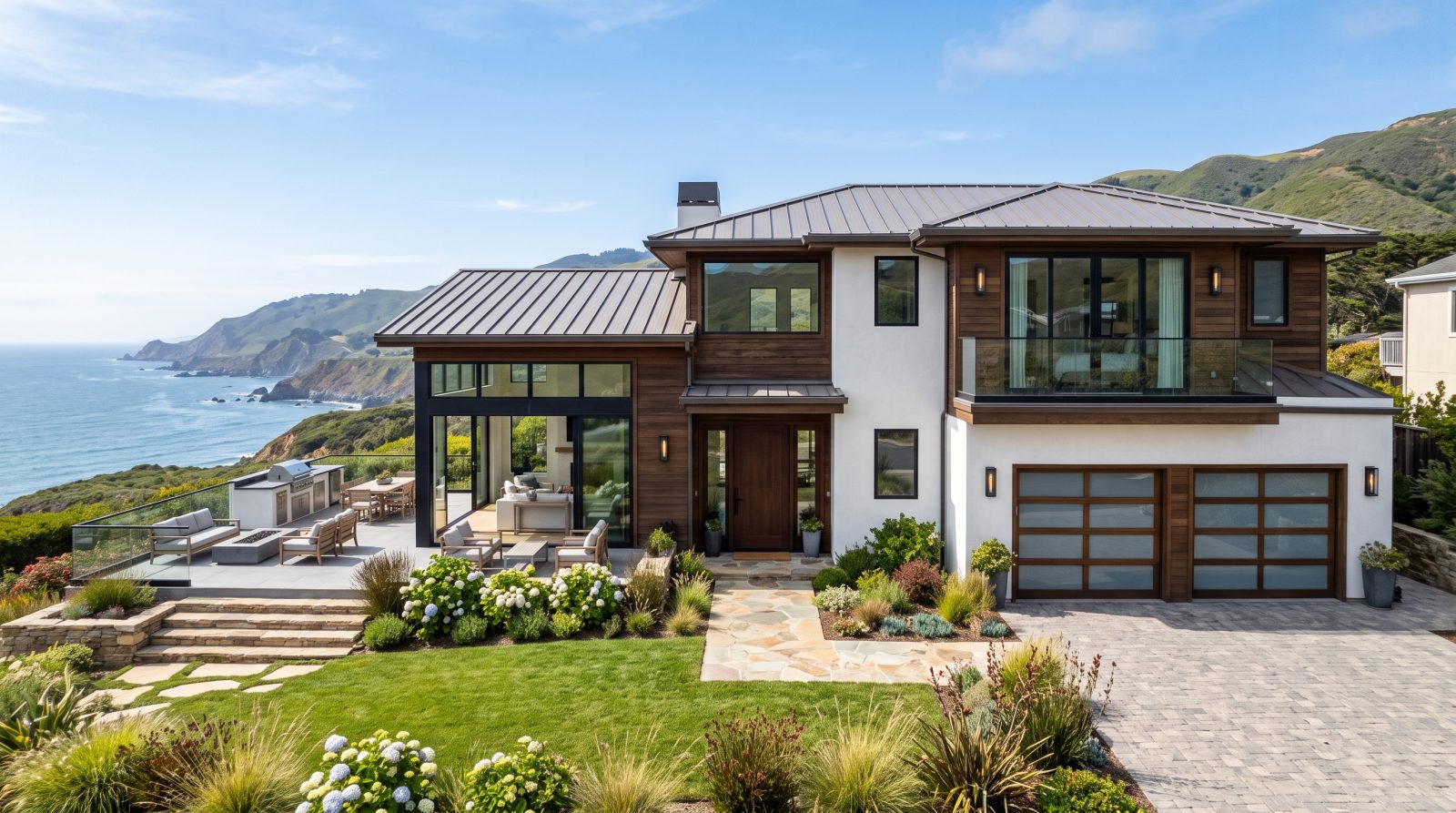
Why is remodeling in Pacifica different from the rest of the Bay Area?
Pacifica sits directly on the Pacific coast, and that location drives most of the differences contractors plan around. Salt-laden air and near-constant marine moisture accelerate corrosion and wood decay, so exterior materials, fasteners, flashing, and finishes that are standard inland often need a coastal-rated specification here. Homes in fog-belt neighborhoods such as Sharp Park, Vallemar, and Pedro Point tend to see more issues with moisture intrusion, mildew, and weathered siding than comparable homes a few miles east in sunnier inland valleys.
The city's geography also matters. Many Pacifica lots are on hillsides, ridgelines, or near coastal bluffs, which can introduce grading, drainage, retaining-wall, and access considerations that a flat inland lot would not. Properties closer to the shoreline may fall within California's coastal zone, which can add another layer of review beyond a standard building permit. Because each of these factors varies block by block, a local contractor will typically want to see the specific property before scoping the work.
- Salt air and coastal fog favor corrosion-resistant fasteners, flashing, and coastal-rated exterior finishes
- Hillside and bluff-edge lots can mean grading, drainage, and retaining-wall work
- Moisture and mildew management matter more here than in inland Bay Area cities
- Properties near the shoreline may sit in the coastal zone, which can add review steps
What home remodeling projects are common in Pacifica neighborhoods?
Pacifica's housing stock leans heavily toward single-family homes built from the 1940s through the 1970s, with concentrations of mid-century tract homes in Linda Mar, Park Pacifica, Fairmont, and the Manor and Edgemar areas. Because many of these homes share a similar era and footprint, certain remodels come up repeatedly: kitchen and bathroom updates, opening up compact mid-century floor plans, adding or finishing space on sloped lots, and replacing aging windows, siding, decks, and roofing that have weathered decades of coastal exposure.
Accessory dwelling units (ADUs) are also a frequent interest for Bay Area homeowners, both for family use and to add space, though feasibility on Pacifica's hillside and smaller lots depends heavily on the individual parcel. Exterior and envelope work, including re-siding, deck rebuilds, drainage improvements, and moisture-related repairs, tends to be more prominent here than inland because of the marine environment. Whatever the project, a good first step is describing your home's age, neighborhood, and goals so a local contractor can tell you what is realistic for your specific property.
Remodeling content here is educational and is not legal advice. Scope, feasibility, and code requirements vary by property, so confirm specifics with a licensed professional and the relevant jurisdiction.
- Kitchen and bathroom remodels in mid-century homes
- Opening up or reconfiguring compact 1950s–60s floor plans
- Window, siding, deck, and roof replacement after years of coastal exposure
- Drainage, retaining-wall, and moisture-repair work on sloped lots
- ADU and added-space projects where the parcel allows
How do permits work for a Pacifica home remodel?
Pacifica is an incorporated city in San Mateo County, and building permits for work inside city limits are generally handled through the City of Pacifica's building and planning functions rather than the county's unincorporated-area process. As a general rule across California jurisdictions, structural changes, electrical and plumbing work, additions, re-roofing, decks, retaining walls, and many window and siding projects require permits, while small cosmetic updates often do not. Exact thresholds vary, so the requirement should always be verified with the city before work starts.
Coastal location can add steps. Properties within Pacifica's designated coastal zone may require a Coastal Development Permit under the city's certified Local Coastal Program, and lots closest to the shoreline can fall in an appeal jurisdiction tied to the California Coastal Commission; hillside or bluff-adjacent lots can also trigger geotechnical or drainage review. Permit timelines depend on project complexity and current city workload, so it is reasonable to ask a contractor for a realistic estimate of the review window for your specific scope rather than assuming a fixed timeline. A licensed general contractor will typically help identify which permits apply and can pull them as part of the project.
- Work inside Pacifica city limits is generally permitted through the City of Pacifica
- Structural, electrical, plumbing, additions, roofing, decks, and retaining walls typically need permits
- Coastal-zone properties may need a Coastal Development Permit; shoreline-adjacent lots can involve Coastal Commission review
- Permit timelines vary by scope and city workload; verify requirements before starting
What do home remodeling projects typically cost in Pacifica?
The figures below are typical industry ranges for the Bay Area, offered only as planning estimates, not quotes. Actual pricing depends on the size and condition of your home, material choices, structural and site conditions, and the contractor you hire. Coastal factors common in Pacifica, such as corrosion-resistant materials, moisture remediation, and hillside access or drainage work, can push a project toward the higher end of a range or add line items that an inland home would not have.
As a rough planning reference, mid-range kitchen remodels in the Bay Area commonly fall in the tens of thousands of dollars and can run well into six figures for high-end or structural work; bathroom remodels are typically a smaller fraction of that; and exterior projects like re-siding, deck rebuilds, and roof replacement vary widely with size and materials. The only reliable way to know your number is to have a contractor assess your specific property. Requesting a free quote lets a local pro give you a figure grounded in your actual home rather than a generic average.
- All ranges are typical industry estimates for planning, not quotes
- Coastal materials, moisture work, and hillside access can raise costs
- Final pricing depends on your home's size, condition, materials, and scope
- A free quote from a local contractor is the only way to get a real number
How do I connect with a Pacifica contractor?
To get started, request a free quote describing your project, your Pacifica neighborhood, and your home's approximate age and size. The more detail you provide about your goals and any known issues, such as moisture, drainage, or aging exterior materials, the more useful the initial response will be. There is no published phone line; the fastest way to begin is through the free-quote and contact action on this site.
When you speak with any contractor, it is good practice to verify that they hold an active, appropriate California license for the work, confirm they carry insurance, and ask how they handle permits with the City of Pacifica. Because coastal conditions and hillside lots are common here, it also helps to ask about their experience with salt-air-resistant materials and moisture management. Confirming licensing, permits, and insurance directly with the contractor and the relevant agencies protects you and keeps the project on solid footing.
- Request a free quote with your neighborhood, home age, and project goals
- No phone is published; use the contact or free-quote action to begin
- Ask any contractor about California licensing, insurance, and permit handling
- Confirm experience with coastal materials and hillside or drainage work