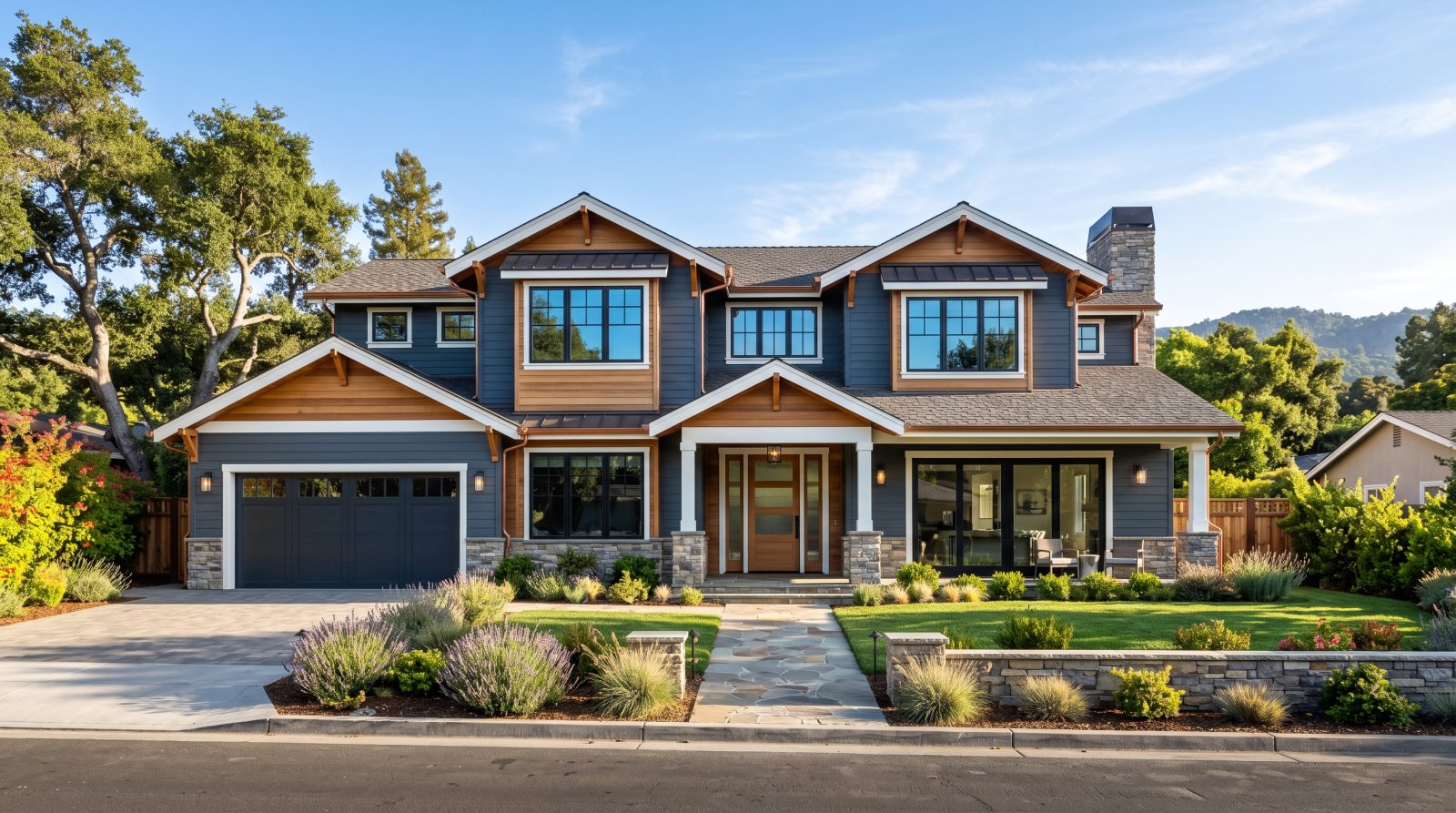
What home remodeling looks like in Saratoga
Saratoga is a small, hillside-and-valley city in Santa Clara County's West Valley, bordered by Cupertino, San Jose, Los Gatos, and Monte Sereno and backing onto the Santa Cruz Mountains. Its housing stock leans toward single-family homes on generous lots: post-war and 1960s-70s ranch and mid-century houses in the flatter neighborhoods, plus larger custom and estate homes climbing into the foothills. That combination drives the kind of remodeling work common here.
In the valley-floor neighborhoods like the Golden Triangle (between Saratoga, Cox, and Saratoga-Sunnyvale roads), Saratoga Woods, Greenbriar, and Brookview, projects tend to be kitchen and bath updates, room additions, ADUs, and reworking dated ranch floor plans into open layouts. Up in the hills around Parker Ranch and the Mountain Winery area, work skews toward larger renovations, decks and outdoor living spaces, and structural or foundation projects on sloped lots.
Older homes in and near the historic Village along Big Basin Way can carry their own quirks, including aging electrical, galvanized or older plumbing, and finishes worth preserving. A good general contractor scopes these realities up front rather than discovering them mid-project, which is part of why getting a clear, written scope before work begins matters so much here.
- Common Saratoga projects: kitchen and bath remodels, ranch-home opening up, room additions and ADUs, decks and outdoor living, foundation and structural work on hillside lots
- Valley neighborhoods (Golden Triangle, Saratoga Woods, Greenbriar, Brookview): mid-century and ranch updates
- Foothill/estate areas (Parker Ranch, Mountain Winery vicinity): larger renovations and slope-aware structural work
- Older Village-area homes: aging systems and finishes that reward a careful, experienced contractor
How much do remodeling projects typically cost in Saratoga?
Costs in Saratoga track the broader Bay Area, where labor and materials run higher than national averages and finish expectations tend to be elevated. The figures below are typical industry estimate ranges to help you plan, not quotes. Your actual price depends on scope, the condition of existing systems, finish level, structural and site conditions, and current market pricing, so always get an itemized written estimate.
Kitchen remodels commonly land in the roughly $40,000-$120,000+ range, with high-end and structural reconfigurations going higher. Bathroom remodels often fall around $25,000-$70,000+ depending on whether you are refreshing finishes or moving plumbing and walls. Room additions and ADUs frequently run from the low six figures upward, and whole-home or estate-level renovations can extend well beyond that.
Hillside lots can add cost that flat-lot projects do not face, including engineered foundations, grading, drainage, retaining walls, and access challenges for materials and equipment. Tree protection and any wildfire-related building requirements in the foothills can also affect both budget and timeline. Treat any number you see online as a starting reference and let a contractor price your specific home and site.
- Kitchen remodel: typically ~$40,000-$120,000+ (estimate range, not a quote)
- Bathroom remodel: typically ~$25,000-$70,000+
- Room addition / ADU: typically low six figures and up
- Hillside factors that can raise cost: engineered foundations, grading and drainage, retaining walls, restricted site access, tree protection, WUI requirements
- Always request an itemized written estimate for your specific project
Permits, hillside rules, and tree protection in Saratoga
Most meaningful remodeling in Saratoga requires permits, typically issued through the City of Saratoga's building and planning functions, with some work touching Santa Clara County depending on location and utility connections. Structural changes, additions, electrical and plumbing work, decks, retaining walls, and many exterior changes generally need a permit and inspections. This page is educational and not legal advice, so confirm current requirements with the City before you commit to a scope.
Saratoga is known for taking its hillsides and tree canopy seriously. Hillside and grading regulations can apply to sloped lots, and the city has tree-preservation rules that may require permits to remove or significantly affect certain protected and heritage trees, including some on private property near a construction footprint. A contractor and, where needed, an arborist or civil engineer should factor these into planning early.
Foothill properties in and near the wildland-urban interface may also face wildfire-related building considerations, such as defensible space and materials choices in higher-risk zones. Verifying the permit path, the applicable ordinances, and any required professional reports at the start helps avoid stop-work surprises and keeps the timeline honest.
- Typically permitted: additions, structural changes, electrical/plumbing, decks, retaining walls, many exterior alterations
- Hillside/grading rules may apply to sloped lots; engineered plans are often involved
- Tree-preservation rules can require permits before removing or impacting protected/heritage trees
- Foothill (WUI) areas may carry wildfire-related building and defensible-space considerations
- Confirm current requirements with the City of Saratoga before finalizing scope
How to choose a contractor in Saratoga
Because Saratoga projects often involve hillside conditions, tree rules, and higher-end finishes, vetting matters. Start by confirming the contractor is properly licensed and carries appropriate insurance for your project. In California, you can verify a contractor's license status and classification through the Contractors State License Board (CSLB) before signing anything; we do not publish or vouch for specific license numbers, so verify directly.
Ask for a clear written scope and an itemized estimate, and make sure it spells out who pulls permits, how change orders are handled, the projected timeline, and the payment schedule. For hillside or structural work, ask how they coordinate engineers, arborists, and inspections. References from comparable Saratoga or West Valley projects, and a recent example of similar work, help you gauge fit.
A trustworthy contractor will talk openly about unknowns, especially in older homes, rather than promising a guaranteed price or timeline before the scope is fully understood. Contractors Near Me connects you with local contractors so you can compare approaches; the vetting and contract decisions stay with you, and we encourage getting more than one estimate.
- Verify license and classification via the CSLB and confirm appropriate insurance
- Get an itemized written estimate covering scope, permits, change orders, timeline, and payment schedule
- For hillside/structural work, ask how engineers, arborists, and inspections are coordinated
- Request references and examples of comparable West Valley projects
- Compare more than one estimate before deciding