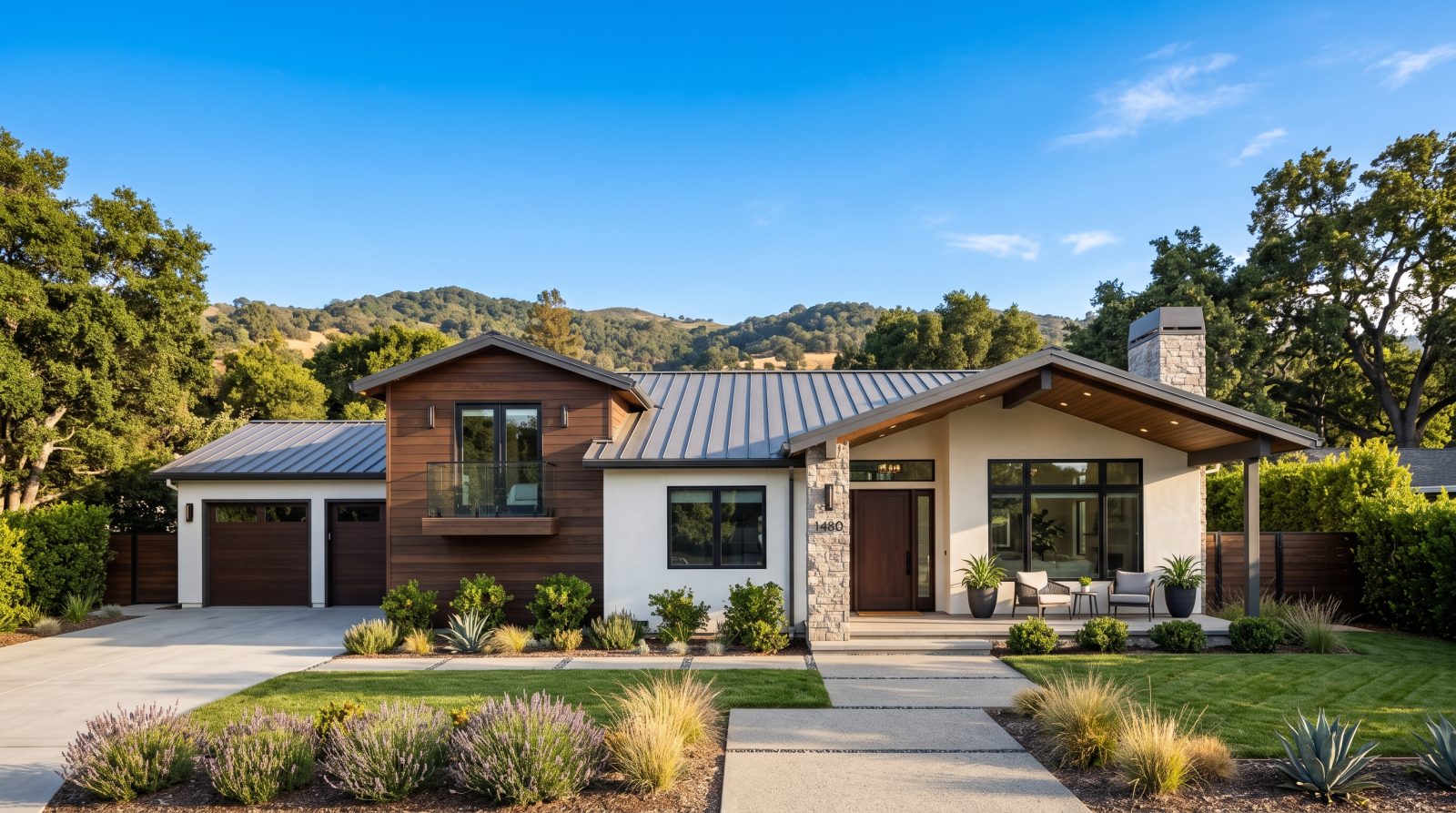
What home remodeling projects do Gilroy homeowners hire contractors for?
Gilroy's housing stock spans more than a century, which shapes the work local general contractors take on. In the older core around downtown and Old Gilroy near Monterey Street, you'll find early-1900s bungalows and Victorians where owners pursue kitchen and bathroom updates, foundation and seismic retrofit work, older plumbing or wiring replacement, and additions that respect an original footprint. Mid-century ranch homes around the central and east side commonly see open-concept kitchen reconfigurations, primary-suite additions, and window and insulation upgrades.
Newer master-planned areas such as Glen Loma Ranch and Eagle Ridge tend toward finish-out and lifestyle projects: backyard living spaces, casitas and accessory dwelling units (ADUs), home offices, and cosmetic remodels rather than structural overhauls. Across all of these, Gilroy's hot, dry summers and the South Valley climate often make energy-efficiency work a priority, including HVAC, attic insulation, dual-pane windows, and shade or covered-patio additions.
Because Gilroy includes both flat valley-floor parcels and homes climbing toward the Diablo Range foothills on the east, drainage, grading, and slope considerations come up more often here than in many flat South Bay locations. It is worth raising those factors early with any contractor you interview.
- Kitchen remodels: layout changes, cabinetry, countertops, lighting, and appliance updates
- Bathroom remodels: from refreshes to full reconfigurations and accessibility upgrades
- Room additions and second stories to add space without leaving the neighborhood
- Accessory dwelling units (ADUs) and casitas, common in newer subdivisions
- Foundation, drainage, and seismic retrofit work, especially on older downtown homes
- Whole-home renovations, outdoor living spaces, and energy-efficiency upgrades for the South Valley climate
How much does a remodel typically cost in Gilroy?
The honest answer is that cost depends on scope, finishes, the age and condition of your home, and how much structural or systems work is involved, and only a contractor who has seen your property can give you a real number. What follows are typical industry ranges for the Bay Area, shared as planning estimates rather than quotes. Gilroy pricing can run at or modestly below central Silicon Valley figures because of labor and overhead differences, but materials, permits, and high-end finishes can push any project well above a midpoint.
A few patterns hold locally. Older downtown and Old Gilroy homes can carry hidden costs, such as outdated wiring, plumbing, or foundation issues that surface once walls are open, so budgeting a contingency (commonly 10 to 20 percent) is wise. ADUs and additions on foothill lots may need extra grading, drainage, or geotechnical work that adds to the base. Always get itemized written estimates from more than one licensed contractor so you can compare scope, not just bottom-line numbers.
- Bathroom remodel: roughly $15,000 to $45,000 or more, depending on size, fixtures, and whether plumbing moves
- Kitchen remodel: roughly $30,000 to $90,000 or more, depending on cabinetry, countertops, and layout changes
- Room addition: often $250 to $500 or more per square foot, depending on complexity and finishes
- ADU (detached): commonly $200,000 to $400,000 or more, depending on size, site work, and utility connections
- Whole-home renovation: highly variable; budget per square foot and add a 10 to 20 percent contingency
- Note: all figures are typical estimate ranges for planning only; request itemized quotes from licensed local contractors
Do I need a permit to remodel in Gilroy, and how does it work?
Most remodeling that changes structure, electrical, plumbing, mechanical systems, or a building's footprint requires a permit from the City of Gilroy Building Division, which administers and enforces the California building codes locally. The City uses an online permit portal (GO Permit) for applications and inspection scheduling. Typical permit-triggering work includes additions, ADUs, foundation work, re-roofs, electrical and plumbing changes, water-heater and HVAC replacement, and many window and structural alterations. Smaller cosmetic work, such as painting, flooring, or simple cabinet swaps that don't move plumbing or electrical, often does not, but rules change, so confirm with the City before assuming.
Projects in certain areas may face added review. Homes in or near downtown and historic districts, properties on hillside or sloped lots toward the foothills, and parcels with drainage or grading implications can require additional plan checks. A reputable general contractor will pull the required permits, schedule inspections, and build to code. Any contractor who suggests skipping permits to save time or money is a red flag worth walking away from.
This is general educational information, not legal advice. Permit requirements, zoning, and code interpretations can change, so verify the specifics for your address directly with the City of Gilroy before starting work.
- Permits are issued and inspected locally by the City of Gilroy Building Division (GO Permit portal)
- Commonly required for additions, ADUs, foundation, roofing, electrical, plumbing, and HVAC work
- Downtown and historic, hillside, and drainage-sensitive parcels may need extra review
- A licensed contractor handles permits and inspections; never agree to unpermitted structural work
- Verify current requirements for your specific property with the City before you begin
How do I choose a trustworthy contractor in Gilroy?
Start with the license. As of January 1, 2025, California generally requires a Contractors State License Board (CSLB) license for home-improvement work where combined labor and materials total more than $1,000 (the threshold rose from $500 under Assembly Bill 2622). The limited exemption below that amount does not apply to work that requires a permit or affects a building's structure or safety, so most real remodeling still needs a licensed contractor. You can verify a contractor's license status, classification, and any disciplinary history for free on the CSLB website using their license number; do this yourself rather than taking a number at face value. Ask whether they carry liability insurance and, if they have employees, workers' compensation, and request to see current proof.
Beyond licensing, get multiple written, itemized estimates so you're comparing scope rather than just price. Ask for references from recent projects, and confirm who will actually be on-site and how the contractor handles permits, change orders, and the schedule. Be cautious of unusually low bids, pressure to decide immediately, large upfront cash demands, or anyone reluctant to put terms in writing. California law limits the down payment on home-improvement contracts to the lesser of $1,000 or 10 percent of the contract price.
A good local contractor will be comfortable walking you through their license, insurance, permit plan, and a clear written contract. Contractors Near Me helps you connect with local contractors serving Gilroy, but the verification steps above are yours to complete before you sign anything. These are general guidelines, not legal advice.
- Verify the CSLB license number and status yourself, for free, before hiring
- Confirm liability insurance and workers' comp where applicable, and ask for proof
- Collect multiple itemized written estimates and compare scope, not just totals
- Ask for recent local references and clarity on permits, schedule, and change orders
- Know the down-payment limit (the lesser of $1,000 or 10 percent) and watch for high-pressure or cash-only red flags
Why work with a local contractor who knows Gilroy?
A contractor who regularly works in Gilroy and South Santa Clara County understands the things that don't show up in a generic estimate: how the City of Gilroy's permit and inspection process actually runs, how to handle the older construction in the downtown core, and how to plan for grading and drainage on lots that rise toward the foothills. They are also more likely to have working relationships with local suppliers and subcontractors, which can help with scheduling and sourcing.
Local familiarity matters for the practical rhythm of a project, too: accounting for the area's summer heat when planning HVAC, insulation, or covered outdoor space, and understanding the differences between historic Old Gilroy, the established central and east-side ranch areas, and newer communities like Glen Loma Ranch and Eagle Ridge. When you request a quote through Contractors Near Me, you'll be connecting with contractors serving the Gilroy area. There is no published phone line yet, so the fastest way to begin is the free quote request: describe your project, your neighborhood, and your rough timeline, and a local contractor can take it from there. As always, confirm licensing, permits, and insurance before any work starts.
- Familiarity with the City of Gilroy permit and inspection process
- Experience across historic downtown homes and newer subdivision construction
- Awareness of foothill grading, drainage, and South Valley climate considerations
- Working relationships with local suppliers and subcontractors
- Start with a free quote request: describe your project, neighborhood, and timeline