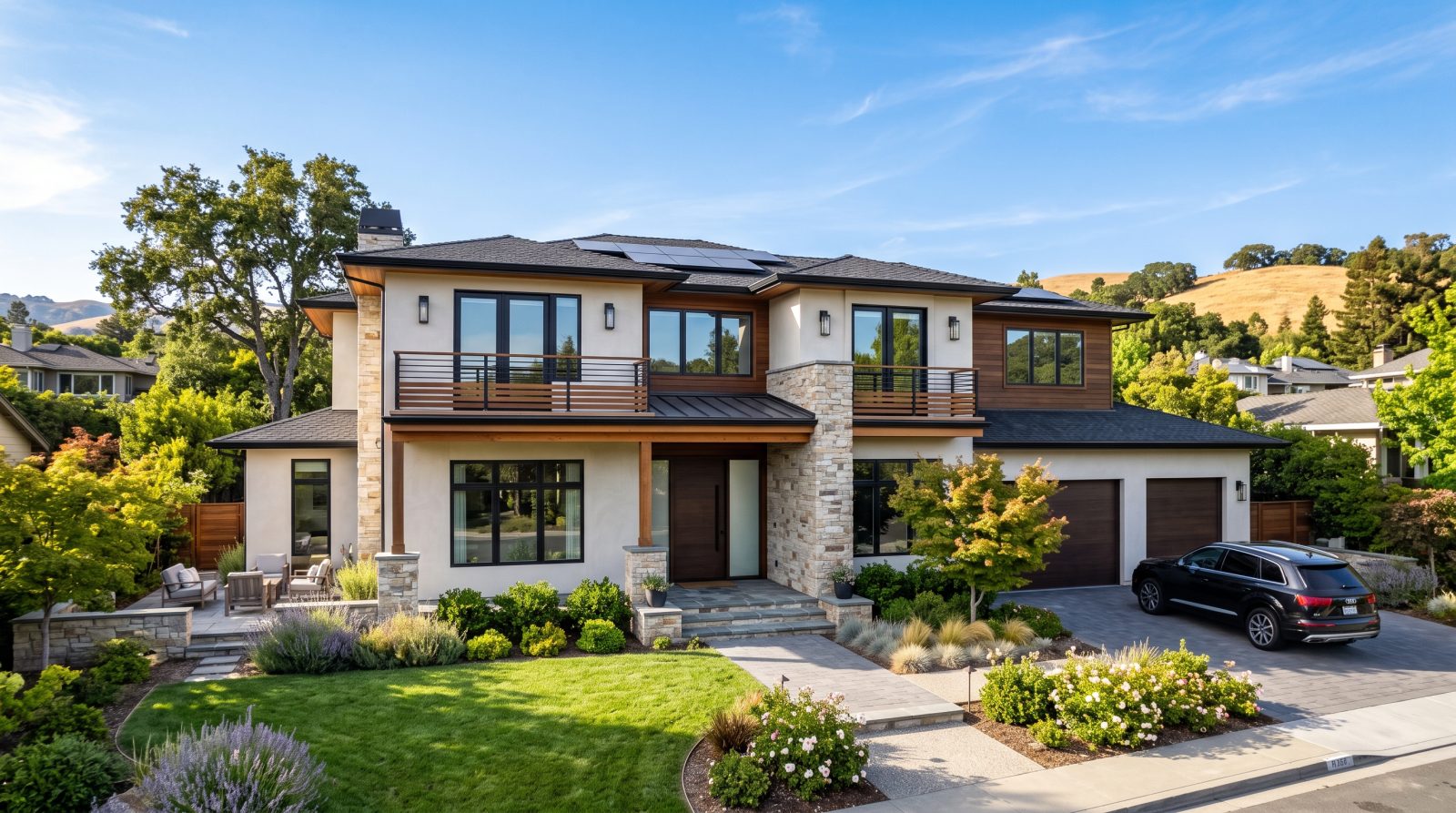
What makes building and remodeling in the San Ramon Valley different?
The San Ramon Valley is a distinct slice of the East Bay: a string of communities tucked between the Las Trampas hills to the west and Mount Diablo to the east, connected by I-680 and the Iron Horse Trail. It is not one city but several jurisdictions side by side - the Town of Danville, the City of San Ramon, and unincorporated county communities like Alamo, Diablo and Blackhawk. For a homeowner, that mix matters because it shapes who reviews your plans, how design standards are applied, and how long approvals can take.
The housing stock varies widely from one neighborhood to the next. Downtown Danville and the older streets nearby include early- and mid-20th-century homes, some with historic character. Alamo is known for larger lots and semi-rural, ranch-style properties. San Ramon's Dougherty Valley - including Gale Ranch and Windemere - is largely master-planned construction from the late 1990s through the 2000s, while Blackhawk is a gated, custom-home community east of Danville. A remodel approach that suits a tract home is rarely the same one that suits a custom Blackhawk property or an older Danville cottage.
Hillside terrain is a recurring theme. Many lots sit on slopes or near the Valley's open-space edges, which can bring grading, drainage, retaining-wall and geotechnical considerations into a project that would be straightforward on flat ground. A local general contractor who has worked these neighborhoods will tend to plan for site conditions rather than discover them mid-project.
- Multiple jurisdictions: Town of Danville, City of San Ramon, and Contra Costa County for unincorporated areas
- Mixed housing eras: historic downtown Danville, ranch-style Alamo, gated Blackhawk, master-planned Dougherty Valley
- Hillside and slope conditions are common near the Las Trampas and Mount Diablo edges
- Tri-Valley East Bay climate: hot, dry summers and cool, wet winters that influence material and drainage choices
Which permits and approvals apply in Danville, San Ramon and unincorporated areas?
Permit requirements in the San Ramon Valley depend on where your home is located, because different authorities handle building permits across the area. If you live within the Town of Danville, your permits and inspections generally go through the Town's building and planning departments. If you live in the City of San Ramon, the City handles them. If your home is in Alamo, Diablo, Blackhawk or another unincorporated area, Contra Costa County is typically the permitting authority - and in Blackhawk, the community association's own rules apply on top of county permits.
As a general guide, most structural work, additions, room conversions, electrical and plumbing changes, water heater and HVAC replacements, re-roofs, and many deck and retaining-wall projects require a permit somewhere in the Valley. Cosmetic work like painting or flooring usually does not. This is general information, not a substitute for confirming with the relevant building department - rules and thresholds change, and only the local authority can tell you what your specific project needs.
Two extra layers are worth knowing about. First, several neighborhoods - especially gated and master-planned communities like Blackhawk and parts of Dougherty Valley - have homeowner associations or design-review committees whose approval is separate from any city or county permit. Second, hillside lots may trigger additional grading or geotechnical review. A contractor familiar with the local process can tell you which approvals likely apply before you commit to a scope, and homeowners should always verify licensing and permit responsibilities directly.
- Danville projects: Town of Danville building and planning departments
- San Ramon projects: City of San Ramon
- Alamo, Diablo, Blackhawk and other unincorporated areas: Contra Costa County
- HOA or design-review approval may be required separately in Blackhawk, Dougherty Valley and other planned communities
- Always confirm permit needs with the authority that covers your address - this page is educational, not legal advice
What home remodeling projects are common in the San Ramon Valley?
Because much of the Valley's housing was built in recent decades, many projects center on updating homes that are structurally sound but dated. Kitchen and bathroom remodels are among the most requested - opening up closed floor plans, replacing builder-grade finishes, and modernizing layouts in homes that have aged into their second or third owners. In Dougherty Valley and similar planned communities, owners often personalize near-identical original layouts.
Additions and indoor-outdoor living projects are also common. The Valley's warm, dry summers make decks, patios, covered outdoor areas and accessory dwelling units (ADUs) popular, and California's statewide ADU rules have made backyard units a frequent topic for homeowners with the lot space typical of Alamo and parts of Danville. Larger Blackhawk and custom properties more often see whole-home updates, primary-suite expansions and higher-end finish work.
Maintenance-driven work rounds out the picture: re-roofing, window replacement for energy efficiency, drainage and retaining-wall repair on sloped lots, and exterior updates that hold up to the Tri-Valley's hot summers and wet winters. The right scope depends on your home's era, your neighborhood, and your goals - a local general contractor can help you sequence these so a remodel and necessary repairs are handled together rather than twice.
- Kitchen and bathroom remodels in homes with dated or builder-grade finishes
- Room additions, primary-suite expansions and floor-plan openings
- Decks, patios, covered outdoor living and ADUs (backyard units) on larger lots
- Re-roofing, window replacement, drainage and retaining-wall work on hillside properties
What do San Ramon Valley remodeling projects typically cost?
Costs in the San Ramon Valley vary widely with scope, finishes, your home's age and site conditions, so the figures below are typical industry ranges meant for planning - they are estimates, not quotes, and the only accurate number comes from a contractor who has seen your project. Bay Area labor and material costs, hillside access, and HOA or design-review requirements can all push a project toward the higher end of any range.
As broad planning ranges, a mid-level bathroom remodel commonly lands somewhere in the low-to-mid five figures, while a larger or higher-end bathroom can run higher. Kitchen remodels span a wide band depending on whether you keep the existing layout or move plumbing, electrical and walls - layout changes and premium finishes are usually the biggest cost drivers. Room additions and ADUs are generally the largest projects, with cost tied closely to square footage, foundation and utility work, and site access.
Several Valley-specific factors can move your number: sloped or hillside lots may add grading, drainage or geotechnical costs; older Danville homes can hide outdated wiring or plumbing that surfaces once walls open; and projects in design-controlled communities may carry added time and specification requirements. Getting more than one quote, and asking each contractor to break down labor, materials, permits and allowances, is the best way to compare fairly.
- All figures are typical industry ranges and planning estimates - not quotes
- Biggest cost drivers: scope, finish level, square footage, and whether you move plumbing/electrical or walls
- Valley-specific add-ons: hillside grading and drainage, hidden conditions in older homes, design-review requirements
- Compare itemized quotes (labor, materials, permits, allowances) from more than one contractor
How do I find and vet a contractor in the San Ramon Valley?
Start by matching the contractor to your project and your neighborhood. A general contractor who regularly works in the Valley will understand the differences between Danville, San Ramon and the unincorporated areas, the HOA and design-review steps in communities like Blackhawk and Dougherty Valley, and the realities of building on the area's hillside lots. Local familiarity tends to mean fewer surprises on permits, scheduling and site conditions.
Do your own due diligence before signing anything. In California, contractors performing most work above a set dollar threshold must be licensed; you can verify a contractor's license status and standing through the California Contractors State License Board (CSLB) directly. Ask for written, itemized estimates, confirm who pulls the permits, and get the scope, timeline and payment schedule in writing. Confirm insurance and any HOA approvals yourself rather than relying on assurances - verifying licensing, permits and insurance is the homeowner's protection.
Contractors Near Me makes the first step simple: tell us about your San Ramon Valley project and we'll help connect you with local contractors so you can request a free quote and compare options. We don't replace your own checks - we help you start the conversation. When you're ready, use the free quote request to describe your project, your town or neighborhood, and what you're trying to accomplish.
- Choose a contractor who knows your jurisdiction (Danville, San Ramon, or unincorporated county) and any HOA rules
- Verify license status yourself through the CSLB before hiring
- Get written, itemized estimates and confirm who is responsible for permits
- Use the free quote request to describe your project and connect with local contractors - no phone call required to start