What does a general contractor in Orinda actually handle?
A general contractor (GC) is the licensed professional who manages a construction or remodeling project from planning through final inspection. In California, anyone performing home improvement work valued at $1,000 or more in combined labor and materials must hold a license from the Contractors State License Board (CSLB); this threshold was raised from $500 effective January 1, 2025. For most full-scale Orinda remodels and additions, you'll want a contractor holding a Class B (General Building) license. Before hiring, you can verify any license number for free on the CSLB website to confirm it's active and check for bond and workers' compensation coverage.
In Orinda specifically, a GC typically coordinates the architect or designer, the structural engineer (often essential on the city's sloped lots), subcontractors such as electricians and plumbers, the permit submittal, and inspections. Because so many Orinda homes sit on hillsides and among mature trees, a good local contractor also plans around grading, drainage, retaining walls, and tree protection from the very start rather than as an afterthought.
Common Orinda projects include kitchen and bathroom remodels in mid-century and ranch homes, room additions and second stories that capture canyon or reservoir views, foundation and seismic retrofits, deck and outdoor-living builds, and accessory dwelling units (ADUs). Many homeowners in the hills above Orinda Village and around the Country Club area also invest in re-roofing and exterior upgrades tied to wildfire hardening.
How do permits and design review work for Orinda remodels?
Orinda incorporated in 1985 and runs its own Planning Department, while building plan check and inspection services are provided through Contra Costa County, which the city contracts with for that function. In practice this means your project's planning and design review go through the City of Orinda, and your building permit, plan check, and inspections are handled by Contra Costa County's building officials. Building permits are generally required for structural changes, additions, new electrical or plumbing, decks, retaining walls, re-roofs, and many remodels. Smaller cosmetic work like painting or flooring usually doesn't need one, but it's worth confirming before you start.
What surprises many newcomers is Orinda's emphasis on design review. The city has long worked to preserve its semi-rural, wooded character, and projects that change a home's exterior, add height or bulk, or affect views and neighborhood compatibility can trigger Planning Department or Planning Commission review. Hillside lots, in particular, are subject to additional scrutiny around grading, height, and how a structure sits against the slope. An experienced Orinda contractor will tell you early whether your project is likely to need design review, because that step affects both timeline and budget.
Tree protection is another local factor. Orinda has a tree ordinance protecting many native and significant trees, so removing or building near oaks and other protected species may require a permit and a replacement or mitigation plan. Water service comes from EBMUD and most fire protection is provided by the Moraga-Orinda Fire District (MOFD), both of which can play a role in plan approval for larger projects. Because timelines vary with project scope and review requirements, ask your contractor to map out the approval path specific to your lot before you commit.
What do remodeling projects typically cost in Orinda?
Costs in Orinda tend to run higher than national averages because of Bay Area labor rates, the complexity of hillside construction, and design-review and engineering requirements that simpler flat-lot projects avoid. The figures below are typical ranges to help you budget, not quotes. Your actual price depends on your home's age and condition, finish levels, structural and access challenges, and current material costs. The only reliable number is a written, itemized estimate from a licensed contractor who has seen your property.
Treat any single price you see online with caution. Two Orinda kitchens of the same square footage can differ dramatically in cost once you factor in whether walls move, whether the panel needs upgrading, and how steep the driveway access is for deliveries and crews.
- Mid-range kitchen remodel: often in the tens of thousands, with upscale custom kitchens running well into six figures
- Bathroom remodel: typically a mid-five-figure range for a full gut, less for a refresh
- Room addition: priced per square foot and usually higher on sloped lots that need extra foundation and structural work
- ADU (accessory dwelling unit): a significant project whose cost varies widely with size, site access, and utility connections
- Seismic retrofit / foundation work: varies with the home's era and foundation type, common in Orinda's older hillside houses
- Re-roof and wildfire hardening: often paired together, with cost driven by roof size, pitch, and material choice
Why does Orinda's location and housing stock affect your project?
Orinda sits just east of the Caldecott Tunnel in Contra Costa County, part of the Lamorinda area alongside Lafayette and Moraga. Its rolling, wooded hills are the city's signature, and they're also the reason construction here demands more planning than a flat suburban lot. Steep driveways, limited street parking, and narrow approaches can complicate material delivery and crew access, and grading and drainage have to be handled carefully so runoff doesn't undermine a slope or a neighbor's property downhill.
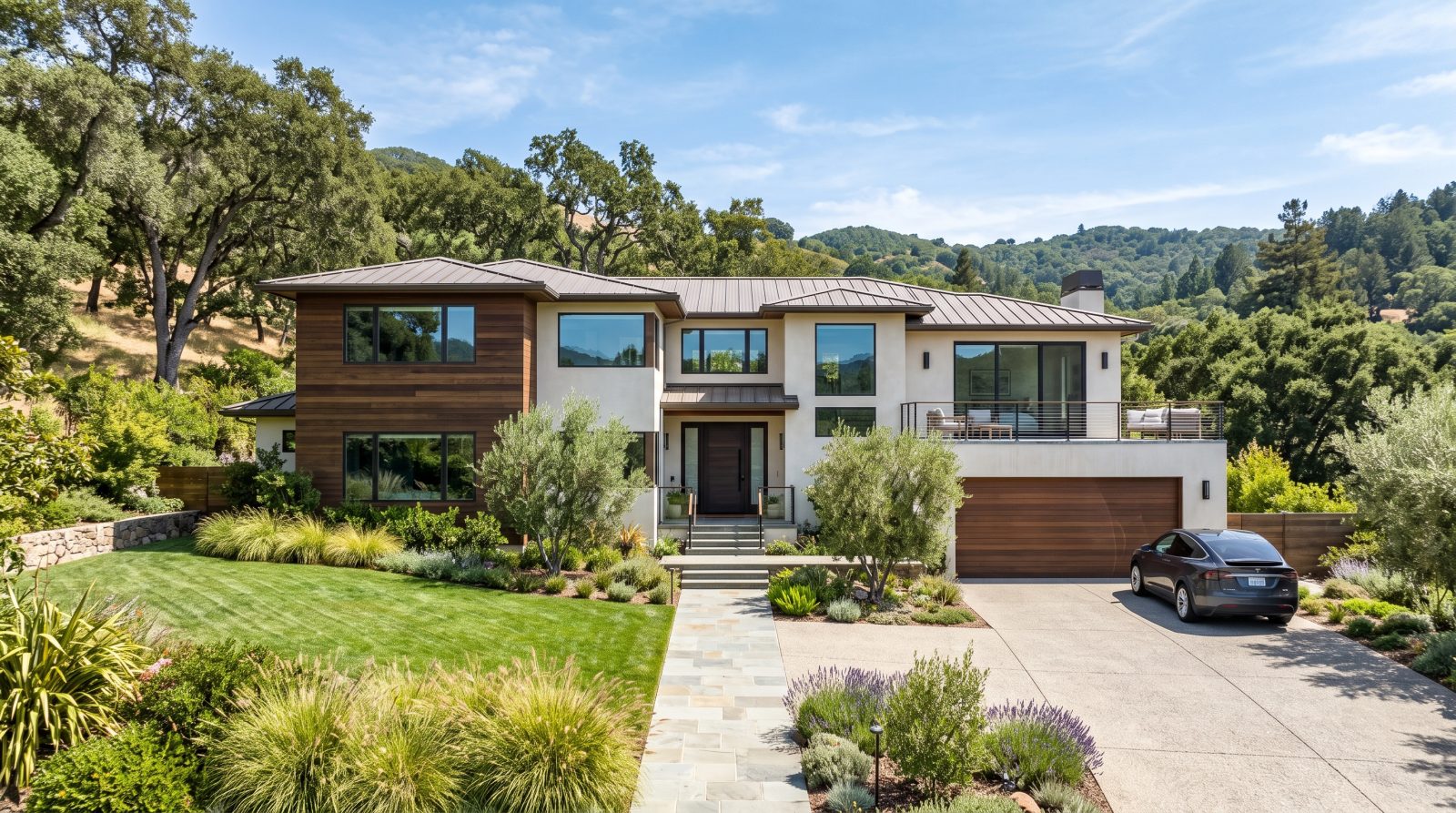
The housing stock reflects Orinda's growth from an early-20th-century and post-war commuter community into a built-out residential city. You'll find a lot of mid-century modern, ranch, and Mediterranean-style homes, many built in the 1950s through 1970s, alongside older cottages near Orinda Village and newer custom homes in areas like the Orinda Country Club neighborhood, Sleepy Hollow, and Glorietta. Homes of this era often need updates that a good contractor will flag: original electrical panels, galvanized or aging plumbing, single-pane windows, foundations that may benefit from seismic bracing, and floor plans that today's owners want opened up.
Wildfire is a serious local consideration. Much of Orinda lies in or near a designated high or very high fire hazard severity zone in the wildland-urban interface, so projects increasingly incorporate ignition-resistant materials, ember-resistant vents, and defensible-space-friendly landscaping. The Moraga-Orinda Fire District provides guidance, and a contractor familiar with these requirements can help you build to current standards rather than discovering them mid-project.
How do you choose a trustworthy contractor in Orinda?
The best protection for an Orinda homeowner is a careful vetting process before any money changes hands. Start by confirming the contractor's CSLB license is active and matches the company name, then verify they carry liability insurance and workers' compensation. Ask for references from recent Orinda or Lamorinda projects, and where possible ask to see completed work, since hillside and design-review experience here is genuinely different from building on a flat lot elsewhere.
Get detailed written estimates from more than one contractor so you can compare scope, not just bottom-line numbers. A clear contract should spell out the work, materials, payment schedule, change-order process, and timeline. Under California law there are limits on how much a contractor can ask for as a down payment on home improvement work, so be cautious of anyone demanding a large sum up front. Make sure the contract identifies who pulls the permits and confirms the work will be inspected.
Contractors Near Me helps Orinda homeowners connect with local general contractors so you can gather these estimates and references in one place. To get started, request a free quote or send us a message through the contact form. We don't publish a phone number, and we'll never pressure you. Take the time to compare, verify licensing yourself, and choose the contractor whose plan and communication style fit your project.