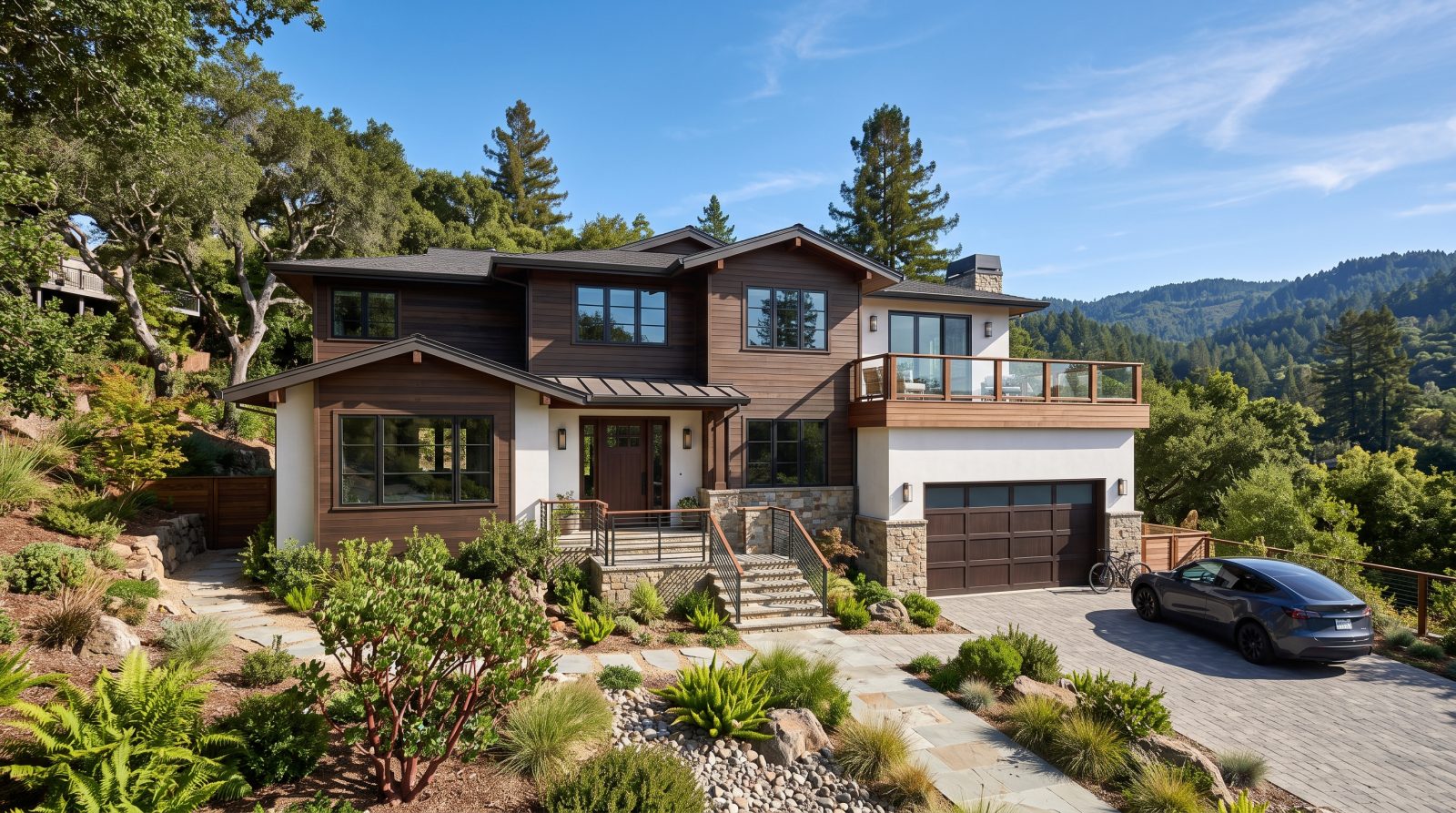
What makes remodeling in Mill Valley different from a flat-lot town?
Much of Mill Valley sits in narrow wooded canyons on the southeastern slopes of Mount Tamalpais, in second- and third-growth redwoods. That geography shapes nearly every project. Hillside lots often mean stepped or pier foundations, retaining walls, and serious attention to drainage and grading, because water moving downhill through a canyon lot can undermine a foundation or saturate a crawlspace over time. A kitchen remodel on a level Sycamore Park lot and the same kitchen on a steep Homestead Valley parcel can be very different jobs once access, structural support, and material delivery are accounted for.
Access itself is a real factor here. Many Mill Valley homes sit up long stairs, down a shared lane, or on streets too narrow for large trucks, which affects how a contractor stages a dumpster, lumber, and crew parking. Tree protection matters too: mature redwoods, oaks, and bays are part of why people live here, and work near them may involve root-zone care and, in some cases, local tree rules. These are the kinds of site conditions a Mill Valley contractor should be walking and noting before giving you a number, not after.
- Hillside and canyon lots commonly involve foundation, retaining-wall, and drainage work alongside the visible remodel
- Narrow streets, shared lanes, and stair access affect staging, parking, and labor time
- Mature redwoods and other protected trees can influence where and how work is done
- Older homes frequently reveal surprises (knob-and-tube wiring, undersized footings, prior unpermitted additions) once walls are opened
How do Mill Valley's older homes affect a remodel?
Mill Valley grew as a getaway from San Francisco and Oakland, and many original homes started as summer cabins and modest cottages before being expanded over the years. Neighborhoods like Homestead Valley carry early-1900s Craftsman and Colonial Revival character, while the flatter Sycamore and Tamalpais Park areas mix stately Victorians with post-WWII cottages, and Strawberry and the bayside pockets lean newer and more modern. Each era brings its own quirks.
With older housing stock, it's common to find original wiring, galvanized plumbing, single-pane windows, settling foundations, and additions that were built in different decades to different standards. A thoughtful remodel here often means deciding early how much of the existing structure to keep versus upgrade. A good contractor will be candid that opening a wall in a 1920s home can reveal conditions that were not visible during the walkthrough, and will explain how they would handle that with you rather than papering over it. If your home has had prior work done, it's also worth confirming whether earlier additions were permitted, since that can surface during your own permit review.
Do I need a permit in Mill Valley, and who issues it?
For most remodels beyond simple cosmetic work, yes. The key thing many homeowners miss is jurisdiction: if your home is inside the City of Mill Valley limits, your building permit goes through the City of Mill Valley Planning and Building Department. But several well-known areas around town, including Tamalpais Valley, Homestead Valley, Almonte, Alto, and Strawberry, are unincorporated and fall under Marin County, which means a different department, different forms, and sometimes different requirements. Confirming which one applies to your address is step one.
The City's process generally involves submitting scaled, dimensioned plans for plan check and coordinating with staff until the plans meet code, after which the permit is issued. Non-structural kitchen and bath remodels are reviewed under their own permit category, and projects that change the exterior typically require a plot plan and elevations. Many submittals expect plans drawn (and, where applicable, stamped and wet-signed) by a licensed designer or architect. This is general information, not legal or code advice. Verify current requirements, licensing, and permit specifics directly with the City of Mill Valley or Marin County for your exact address before starting, and ask any contractor you hire to confirm who pulls the permit.
- City limits = City of Mill Valley Planning & Building Department
- Unincorporated areas (e.g., Tam Valley, Homestead Valley, Almonte, Alto, Strawberry) = Marin County
- Cosmetic-only work may be exempt; structural, electrical, plumbing, and exterior changes generally are not
- Confirm who is responsible for pulling the permit in writing before work begins
What do remodeling projects typically cost in Mill Valley?
Costs vary widely with the size of the project, the condition of the existing home, finish level, and site access, so treat the following as typical ranges to frame a conversation, not quotes. Bay Area labor and materials, plus Mill Valley's hillside and access conditions, tend to push projects toward the higher end of regional ranges. A mid-range kitchen remodel commonly lands in roughly the $40,000 to $90,000+ range, while a bathroom remodel often runs roughly $20,000 to $50,000+, depending on layout changes, plumbing relocation, and finishes. A room addition or a more involved whole-home remodel can range from the low hundreds of thousands upward, especially when foundation, structural, or drainage work is part of the scope.
Two Mill Valley-specific cost drivers are worth budgeting for early. First, site and structural work: retaining walls, foundation reinforcement, grading, and drainage on a sloped lot can add meaningfully to a project before any finishes go in. Second, the unknowns inside older homes, which is why many contractors build in a contingency for conditions discovered after demolition. The most useful thing you can do is get clear, itemized estimates from more than one contractor and ask each to explain how they handle changes and surprises. Request a free quote to start that comparison for your project.
How do I choose and vet a Mill Valley contractor?
Start by getting written, itemized estimates from a few contractors so you can compare scope, not just bottom-line price. For any home-improvement work in California above a small dollar threshold, the contractor should hold an active state license, and you can verify a contractor's license status yourself through the California Contractors State License Board. Confirm they carry liability insurance and workers' compensation, and ask how they handle permits, change orders, and the cleanup and protection of your property during the job.
Because Mill Valley work so often involves slopes, drainage, foundations, and older structures, favor contractors who can speak specifically to those conditions and who walked your actual site before quoting. Ask how they would stage materials given your access, how they protect nearby trees, and how they would approach anything unexpected behind the walls. Be cautious of bids that are dramatically lower than the rest or that pressure you to skip permits. A reputable contractor will put the scope, schedule, payment milestones, and warranty in writing and will be comfortable explaining trade-offs honestly.