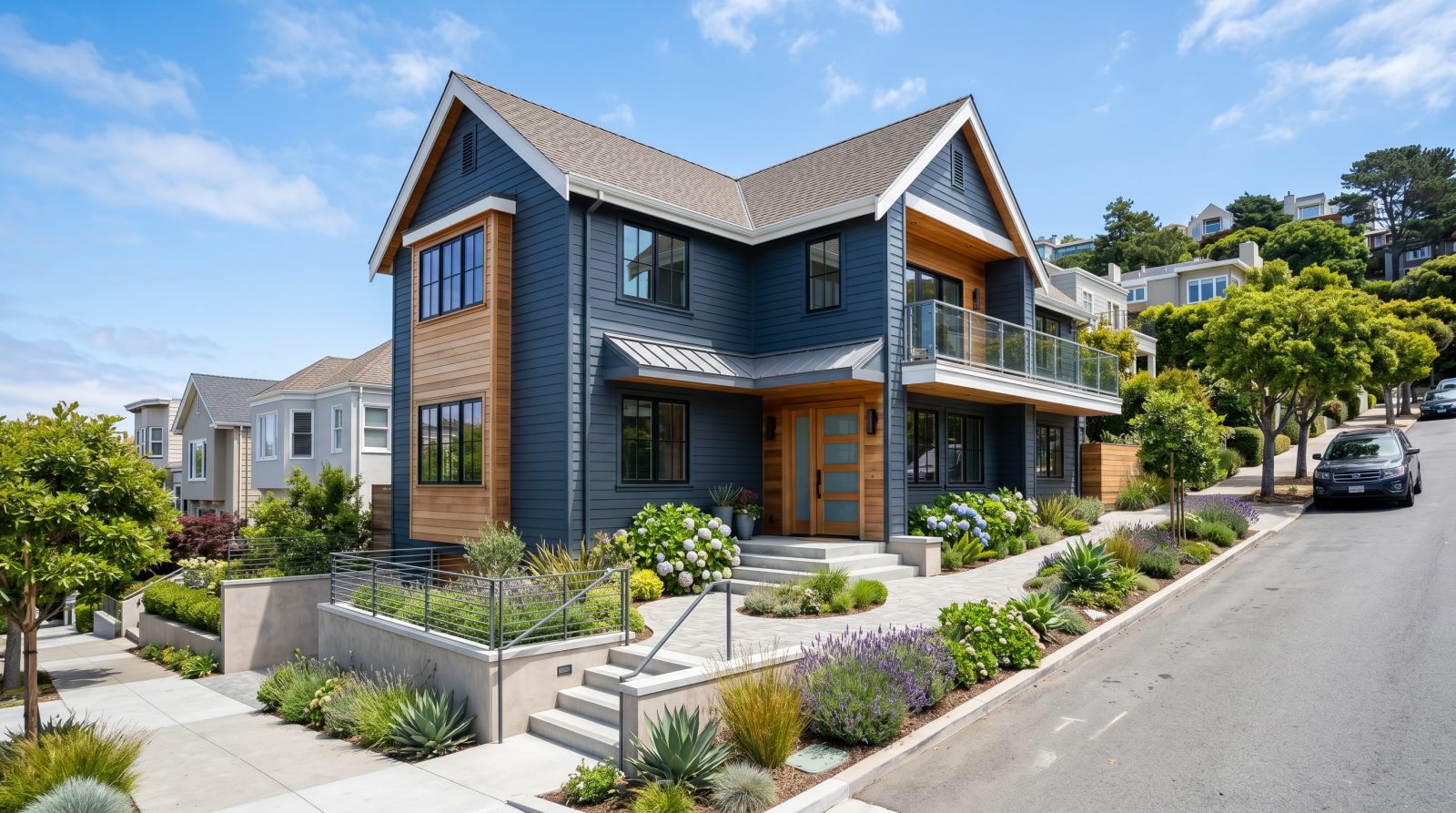
What makes remodeling in San Francisco different?
Remodeling in San Francisco is shaped by old buildings, steep terrain, dense lots, and a notably hands-on permitting environment. A large share of the housing is pre-1940 - Victorian and Edwardian flats in neighborhoods like the Mission, Noe Valley, the Castro, and the Haight, plus early-20th-century flats in Pacific Heights and the Western Addition. These homes commonly hide knob-and-tube wiring, galvanized or cast-iron plumbing, lath-and-plaster walls, and original-growth redwood framing, all of which can change the scope once walls are opened.
Geography adds its own constraints. Homes on hills in Bernal Heights, Twin Peaks, Glen Park, and Diamond Heights often sit on stepped or downslope foundations, where retaining walls, drainage, and access make the same square footage cost more to build than on a flat lot. Out in the Sunset and Richmond, you'll find rows of similar 1920s-1940s homes built over tuck-under garages - a configuration that frequently falls under the city's soft-story seismic rules.
The marine climate matters too. Persistent fog and damp air in the western neighborhoods push homeowners toward moisture-tolerant finishes, good ventilation, and careful exterior detailing. None of this should discourage a remodel - it just means scope, access, and the existing structure deserve a close look before you compare bids, and a contractor familiar with San Francisco's building types will price the realities rather than the surprises.
Which neighborhoods and projects do contractors handle here?
Local contractors work across San Francisco's neighborhoods, and the typical project mix tends to track the housing stock. The list below reflects common requests by area, not a guarantee of availability for any specific contractor.
Because so much of the city is flats and small-lot homes, two of the most common projects are kitchen and bath remodels within an existing footprint and converting unused garage, basement, or attic space into living area or an accessory dwelling unit (ADU). When you request a quote, describing your neighborhood and building type up front helps contractors gauge access, parking, and likely conditions.
- Mission, Noe Valley, Castro, Haight: Victorian/Edwardian flat remodels, kitchen and bath updates, rear additions and decks
- Pacific Heights, Marina, Cow Hollow: whole-home renovations, period restorations, structural and foundation work
- Sunset and Richmond: 1920s-1940s home remodels, garage/ground-floor conversions, soft-story seismic retrofits
- Bernal Heights, Glen Park, Twin Peaks, Diamond Heights: hillside foundation work, retaining walls, downslope additions
- SoMa, Mission Bay, Dogpatch: condo and loft interior remodels (often subject to HOA and building rules)
- Citywide: in-law unit (ADU) conversions, dry rot and water-intrusion repair, electrical and plumbing upgrades
Do I need a permit, and how does SF's process work?
Most structural, electrical, plumbing, and mechanical work in San Francisco requires a permit from the Department of Building Inspection (DBI), and many remodels involve more than one trade permit. Simple, like-for-like cosmetic work (such as painting or swapping a faucet) generally does not, but moving walls, changing layouts, altering the building envelope, or adding a unit almost always does. This is general information, not legal or code advice - confirm requirements for your specific project with DBI or your contractor before starting.
San Francisco runs both an over-the-counter path for simpler permits and a full plan-review path for larger or more complex projects. Work that changes the exterior, is visible from the street, or sits in a historic district can also trigger San Francisco Planning Department review, and homes built before a certain age may require historic screening. Adding or legalizing a dwelling unit follows its own ADU pathway with separate requirements. These extra layers are a normal part of building in San Francisco, but they affect timelines, so it's worth asking a contractor how they plan to sequence permits.
A few practical points homeowners should verify: who pulls the permit (a licensed contractor pulling under their own license is generally preferable to an owner-pull on contractor-performed work), whether the scope needs structural engineering, and whether inspections are scheduled at the right milestones. Permitting protects you on resale and insurance, so treat a contractor's permit plan as part of the bid, not an afterthought.
What do San Francisco remodels typically cost?
The figures below are typical industry cost ranges for the Bay Area, provided for planning only. They are estimates, not quotes, and your actual price depends on scope, finishes, the condition of the existing structure, access, permit requirements, and current labor and material costs. San Francisco generally sits at the higher end of national ranges because of labor costs, permitting, and the age and density of the building stock - opening up an old wall can reveal wiring, plumbing, or framing that adds scope. Always get itemized written estimates from licensed contractors for your specific project.
Project timelines vary just as widely. A straightforward bathroom remodel might span a few weeks of active work once permitted, while a kitchen often runs longer, and whole-home renovations, additions, and ADUs are commonly multi-month projects - with permitting and design adding time before construction even begins. Treat any single-number 'guaranteed' timeline with caution; reputable contractors give a realistic range and explain what could move it.
- Bathroom remodel: roughly $25,000-$60,000+ depending on size, layout changes, and finishes (estimate, not a quote)
- Kitchen remodel: roughly $40,000-$120,000+ depending on scope, cabinetry, and whether walls or systems move (estimate)
- Whole-home or major renovation: highly variable, often six figures, driven by square footage and condition (estimate)
- ADU / in-law unit conversion: commonly a substantial multi-month project; cost depends on whether you're converting existing space or building new (estimate)
- Soft-story / seismic retrofit and foundation work: priced per project after structural assessment (estimate)
- Note: ranges reflect typical Bay Area pricing and will differ for your home - get written, itemized bids
How do I choose and vet a San Francisco contractor?
Start by confirming the contractor holds an active California license for the work. The California Contractors State License Board (CSLB) lets you look up a license number to check its status, classification, and whether bond and workers' compensation information is on file. Verify the license yourself rather than relying on a logo or a claim - this is the single most important step, and it's free.
Beyond licensing, ask for a written, itemized estimate, a clear scope, and a payment schedule tied to milestones rather than a large upfront lump sum. Confirm who will pull the permits, whether the project needs structural engineering or Planning review, and how change orders are handled when an old building reveals surprises mid-project. A contractor experienced with your neighborhood's building type - a Victorian flat versus a Sunset home over a garage - will anticipate conditions that a generalist might miss.
Get more than one bid so you can compare scope, not just price, and be wary of an estimate that's dramatically lower than the others, which often signals missing scope. When you're ready, request a free quote through Contractors Near Me to connect with local contractors, then do your own due diligence on license, references, and the written agreement before any work or money changes hands.